Showing posts with label Architecture. Show all posts

14 February 2017

Ho Chi Minh City (Vietnam) - Notre-Dame Cathedral Basilica of Saigon

Date of Exploration : 29 Jan 2017

Completed in 1880, the Notre-Dame Cathedral Basilica of Saigon is perhaps the oldest major monument of its standing in Ho Chi Minh City. It is conveniently located within the heart of the city in District 1, just opposite the main entrance of the Reunification Palace (the two attractions are separated by a park).

I did a half-day self-guided walking tour of the Notre-Dame Cathedral Basilica of Saigon, the city's Old Post Office next to it, and ending off at the Reunification Palace.

As the foliage of the park that separated the Reunification Palace and Notre-Dame Cathedral Basilica of Saigon parted, the cathedral's transept made its stately presence felt.

I had wanted to start my day's exploration at Reunification Palace first but it was closed during lunch (11am - 1pm) so I came to the cathedral instead.

While I was at the closed gate of the Reunification Palace, a motorcycle taxi rider came up to me and offered to bring me on a ride to show me where the various attractions are located for US$5.00 (duration of ride is about 30 minutes). I did not take up the offer and pointed towards the park in front of the palace's main gate and indicated that I'm going to the cathedral. He told me that the cathedral is not located in the direction which I pointed and offered to take me there. So I consulted Google Map and it showed that the cathedral is very near.

With the staggering amount of traffic in Ho Chi Mink City, getting a clean shot without any vehicle in it is good training for patience. God knows how long I waited to get this shot without any vehicles in it.
I was a little baffled, wondering to believe him or not but I declined his offer anyway and decided to cross the park to find out. As it turned out, the motorcycle taxi rider hadn't been truthful. The cathedral is located exactly in the direction that I pointed and it took me under 3 minutes to cross the road from the gate of the Reunification Palace, cut across the park, and arrive at the side transept of the cathedral!

Personally, I feel that the attractions (Notre-Dame Cathedral Basilica of Saigon, Ho Chi Minh City Old Post Office, Reunification Palace, War Remnants Museum, Ben Thanh Market, the French Quarter and Bitexco Tower) are located within a reasonable walking radius. That's if you stay at the centre of District 1 which is near Ben Thanh Market. So it is not necessary to take the motorcycle taxi ride. Moreover, US$5.00 (approx. 115,000d.) is rather expensive to just ride past the various sites. Anyway, there are a lot of taxi scams and other money rip-offs in Ho Chi Minh City so be very careful. Click here for some of the unpleasant encounters I experienced.


Notre-Dame Cathedral Basilica of Saigon is right next to another of the city's historical gem - the Ho Chi Minh City's Old Post Office that was completed in 1891. It is also listed as one of the city's attractions to visit.

My visit coincided with the Chinese New Year period so while I was crossing the road to Saigon Cathedral, I caught sight of this CNY decoration on wheels. Talk about flower power! LOL

Facade of the Notre-Dame Cathedral Basilica of Saigon. Officially known as the Cathedral Basilica of Our Lady of The Immaculate Conception. I shall call it "Saigon Cathedral" for short.

Building materials for the cathedral were brought over from France with the marble statue of the Virgin Mary fabricated in Rome. "Notre Dame" means "Our Lady" in French.

Getting that essential "I am here" selfie shot :o)

In 2005, this statue of the Virgin Mary apparently wept tears from her right eye with a tear trail running down her right cheek. Is it a miracle?

The weather quickly turned gloomy with light rain during my visit but thankfully, the full blooming sunflowers planted around the statue added a smile to appreciate the cathedral with.

The two bell towers housing 6 bells each stands at a height of 58m.

Getting upclose with the Saigon Cathedral.

The cathedral was closed during my visit so I didn't get to see the interior.

Reflection of a star attraction from the French era of Ho Chi Minh City.

I stayed about an hour snapping photos of Saigon Cathedral's facade, most of the time spent waiting for traffic or people to clear the scene for cleaner shots of this historic religious monument.

Saigon Cathedral may not be as elaborate or atmospheric as the gargoyles-laden and medieval Notre Dame de Paris, but it offered a glimpse into the early Europeanisation of Vietnam. The "invasion" of France into Vietnam's politics started because a Catholic priest asked the French government to provide military support and help to Vietnam's Emperor Gia Long in reclaiming lost lands from the country's rebelling peasants.

So, always be careful when asking for help. Or one may end up losing much more.

04 June 2016

Nara (Japan) - A Day Trip to Nara Park

Date of Exploration : 2 Apr 2016

When we planned a day trip to Nara Park, my intention of coming here was to see the park's famed tame deer. But at the end of my visit, I can't help but marvel at the buffet of experiences I had been served. The park has a unique and delicious mix of natural, cultural, and architectural flavours that few places in Japan, or anywhere else in the world can emulate.

Our excursion to Nara Park was part of the Osaka leg of my first trip to Japan's mainland, which also covered Tokyo and Kyoto. On the intended day of our Nara Park day trip, the weather in Osaka was rainy and gloomy so we checked the Japan MET forecast, saw that the following day was sunny in Nara, and decided to switch our plans to go Nara Park the next day. Boy were we glad we did. Visiting the park during a beautiful day of spring was sublimely splendid! So check the forecast before you visit and retain some flexibility in your itinerary to respond to the weather condition.

Getting to Nara Park (from Osaka)

Nara Park is at the centre of Nara City within Nara Prefecture and it is easily accessible from Kyoto or Osaka. The city of Kyoto, Nara and Osaka form sort of a triangle relative to each other with Nara in between the other two cities.

There are two main train services that link Kyoto and Osaka to Nara. One is the Japan Railways (JR) train and the other is the Kintetsu train. Where possible, choose the Kintetsu railway service as the station is located closer to Nara Park (about 10 minutes walk) while it takes around 20 minutes to walk to Nara Park from the JR Nara Station.

We stayed at Osaka's Namba district and there was a direct Kintetsu railway train to Nara. Ticket price was ¥560 (approx. S$7) and it took us about 40 minutes on the express route. It can be quite confusing when taking the rail services as the same route is served by different trains.

As a general rule, any train that goes the normal route will stop at every station between two points while "limited express" will stop at limited stops between the same two points.

Along the way, we sped past neat rows of low rise houses and buildings as well as fields that stretches towards the city nucleus.
We made the mistake of getting on a normal route train but thankfully we asked the other passengers on the train and a college youngster, though he spoke almost no English, did his best to get us to alight at the last stop that the limited express train would stop and board it. He did it by accompanying us to get off at the stop and pointing us to board the express train even though it was out of his way.

I was so impressed by his hospitality and very grateful because the express train skipped stopping at around 8 stations that the normal train would pick up passengers and that saved quite some travel time. The longest travel time on the limited express train between two stations without any stop is about 25 minutes so do go to the toilet before boarding.

Nature, Culture and Architecture

This post is a brief summation of my visit to Nara Park with an overview of what I encountered and experienced. Key attractions and activities at Nara Park include deer feeding, visiting Kasuga Taisha Shrine, Todaiji Temple, Kofukuji Temple, Nara National Museum and enjoying the lush gardens throughout the park. We didn't managed to cover everything and you can click on the highlighted links above of what we managed to do for more detailed information.

We left our hotel at about 10am to go to Nara Park and ended the visit at about 5pm so plan for a full day trip and go even earlier than us in order to see everything at the park.

The first thing that made my heart skip were the free roaming deer we came across as we got closer to one of the entrances of Nara Park. I didn't expect to see a deer so soon and thought it would be a matter of luck to see them but no, they were everywhere! And if you bought their favourite snack (shika sembei deer biscuit) from one of the street vendors, you won't be left alone.

You don't have to look for the deer at Nara Park. They look for you if you have their addiction on hand... their favourite biscuit - shika sembei. It is okay to feed, pet and get close to the deer but keep in mind that they are wild beasts, abet accustomed to humans, so have an eye out for aggressive behaviour and avoid those that are intrusive.

吵架了。Looks like they had a quarrel and are not seeing eye-to-eye. Well, in any relationship that is close, it is inevitable that each others' coat get ruffled once in a while. It is a test of the strength of the union and the depth of letting-go-ness. Strong ones will grow stronger through the trials, and the unstable ones will snap.
Some beg, others snatch, but most would bow to be fed. Click here to learn the trick of feeding the Nara Park deer.
This scene looks like one of those drawings I made in my childhood years as part of those psychological assessments that predict your personality based on where you placed elements such as tree, river, house, mountain, sun, etc.
The first site of historical importance we came to was Kofukuji Temple. It adjoins a five-tiered pagoda that was built in 730 and has become an unofficial symbol of Nara.
A museum (not the Nara National Museum) that we passed by while on our way to Kasuga Taisha Shrine.

The middle gate (chumon) of Kasuga Taisha, which is a Shinto shrine and stands out from other shrines because of its...

... countless stone and bronze lanterns that decorate and surround the shrine grounds. Read more about Kasuga Taisha here.
From Kasuga Taisha, we walked over to Todaiji Temple, one of Japan's most historically and culturally significant places of worship.
The attraction at Todaiji, and it's hard to miss, is the giant Buddha. Read more about Todaiji here.

Nara Park consists of many gardens and parks that offer rewarding sights during different seasons. We came during the beginning of spring marked by the blossoming of sakuras and an explosion of pink blanketed the Kasugano-enchi Park near Todaiji Temple.

Upclose with one of the yaezakura (cherry blossoms with flowers that have more than 5 petals) species.
The roof poking out from the trees is that of Todaiji Temple. We ended our excursion to Nara Park at Kasugano-enchi Park. The sun was beginning to set and painted the far sky with crimson hues. Surrounding the park were sakuras in full bloom and a wide expanse of grassy field in front of us. I didn't think the scene was particularly captivating, but it was beautiful because of the company I had to see it with.

Related Posts :
Deer Moments at Nara Park
Kasuga Taisha Shrine of Lanterns
Todaiji : The Great Eastern Temple of Shingon Buddhism

14 February 2016

Kuala Lumpur - Chin Woo Stadium : A Forgotten Trophy in Malaysia's Sporting History

Date of Exploration : 30 Dec 2015

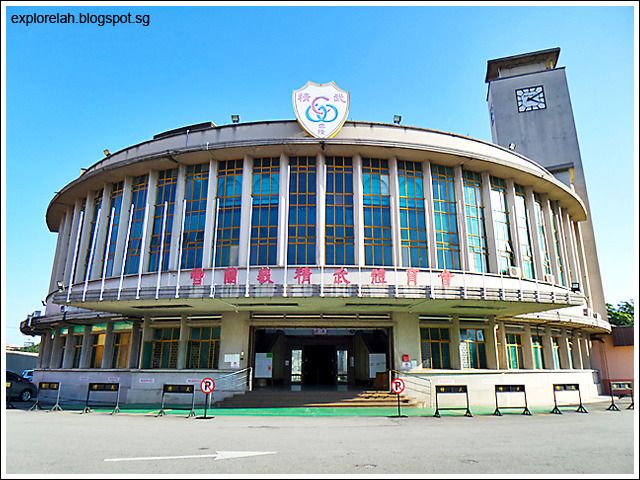
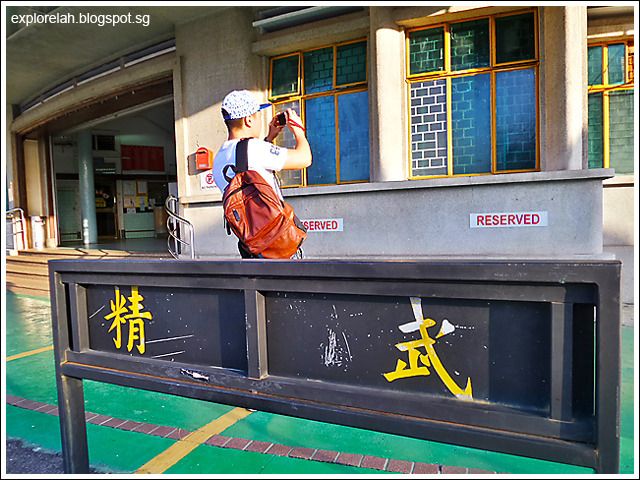
While scouring for unusual old-world sights to explore in Kuala Lumpur, I stumbled across something 'new'... Chin Woo Stadium (精武体育馆). So here I am, compact camera in hand, all eager to bring home images of this architectural memoir authored by a time period I never knew.

Construction of Chin Woo Stadium started on 31 August 1951. It was officially opened on 11 December 1953 and remains till this day, in untouched mint condition
More of a sports hall than stadium, what makes Chin Woo Stadium a rare historical gem is that most sports facilities that are passed their shelf-life get torn down with a new one built as replacement or redeveloped since stadiums take up quite a lot space and are hard to re-purpose (unlike old shophouses which can get a second life as modern cafes, hotels, retail shops, offices and homes).

I've seen a lot of nostalgic old shophouses, magnificent inherited monuments and historical religious constructs around Malaysia, most with a refreshed coat of paint to entice tourists, but this is the first time I'm walking into an old sports hall, and one that is not afraid to show its age.

Getting to Chin Woo Stadium

Perched on a low hill not too far from KL's famous Chinatown district (Petaling Street), the stadium is pretty accessible. You can get here either by dropping off at either one of the two LRT stations that serve the area (Maharajaleela LRT Station and Pasar Seni LRT Station) and walk, it is quite a distance to walk, or take a cab.

We chose the cab option which cost us about RM10 on the meter from the Jalan Bukit Bintang area (KL's most popular shopping street) on a smooth traffic day.

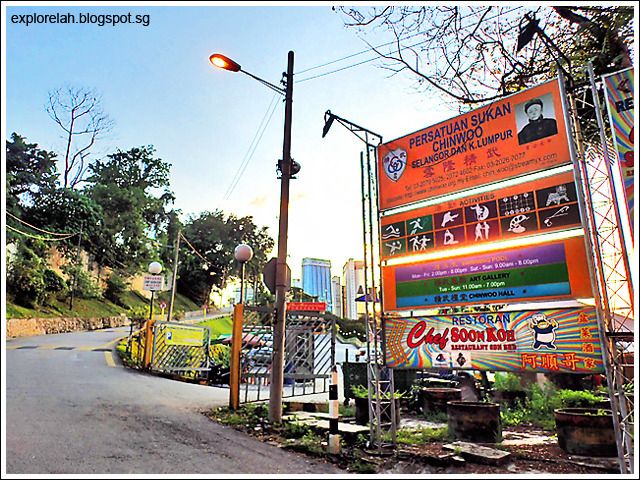
This photo shows the uphill side street off Jalan Hang Jebat that leads to Chin Woo Stadium. Look out for the signboard at the mouth of the side street that advertises the stadium's presence. It is about a 200m walk from the bottom to the top of the hill.
Get Your Kungfu On

If, like me, you grew up with Hong Kong kungfu movies that immortalised the heroism of Chinese folk wushu (martial arts) masters such as Wong Fei Hung (黄飞鸿), Fong Sai Yuk (方世玉), and Yip Kai Man (now popularised as Ip Man 叶问 by Donnie Yen), then you will be no stranger to the name Huo Yuan Jia (霍元甲).

An expert marital artist famed for taking on and defeating foreign fighters who dared challenged Chinese wushu, Huo Yuan Jia was an inspirational figure in China. He co-founded the Chin Woo Athletic Association in Shanghai in 1909, which later established charters in over 20 countries worldwide with no less than 59 branches. There is a Singapore Chin Woo Athletic Association too located at No. 90, Neil Road!

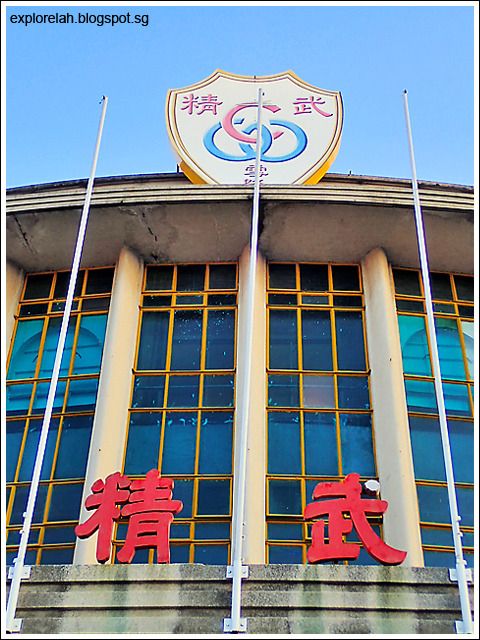
Chin Woo (精武 jing wu) means "essence of marital arts" or "highly skilled in martial arts".

When I first laid eyes on the circular facade of Chin Woo Stadium, time went on a spontaneous rewind. Nothing seemed to have changed since the 50s. There were no refurbishment attempts to modernise its exterior, no visibly new architectural extensions that try so hard to blend into the retro aura, or even a fresh coat of paint.

The amazing thing to me is that the stadium is still a fully functional sporting outlet that is still in use today!

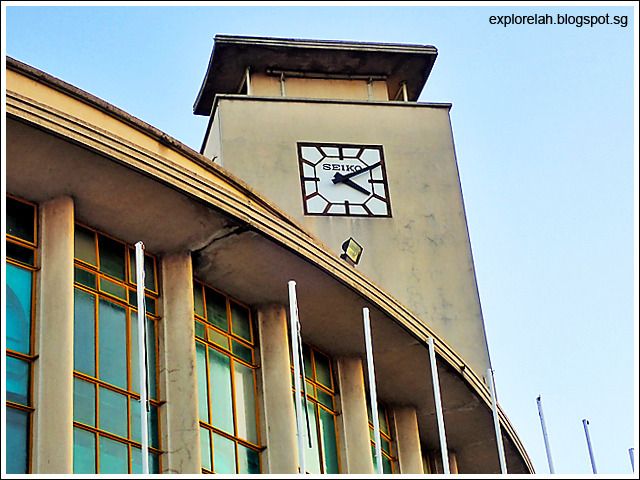
Time really comes to a standstill here. Don't believe me? Take note of the Seiko clock tower at Chin Woo Stadium and see if the hour and minute hands moved from the time you arrive to the moment you leave. The clock is frozen in time.

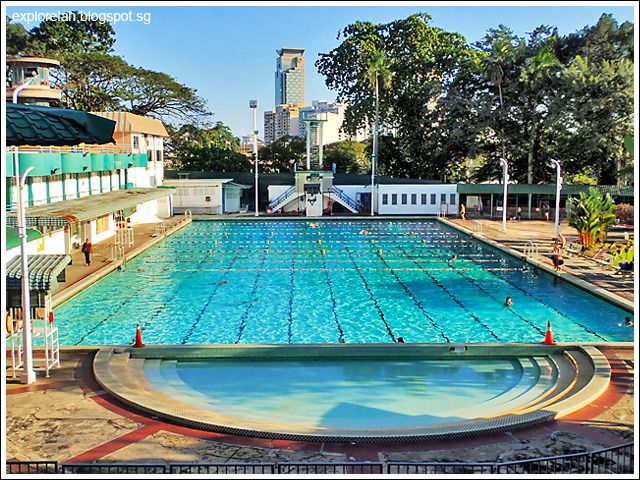
Kuala Lumpur's Chin Woo stadium is one of the earliest sporting facility in Malaysia and the first to own an Olympic-sized swimming pool in the country. Bring along your swimming gear if you would like to take a dip. The pool opens from 2 - 8pm with an entry fee of RM2.00 per adult.

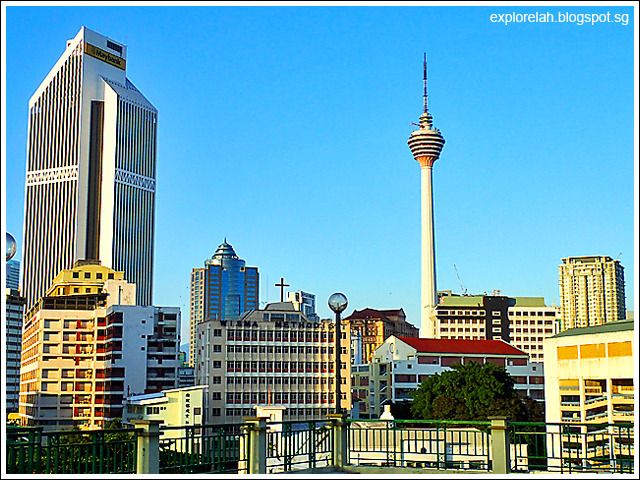
View of Kuala Lumpur's city skyline with the KL tower from the carpark of Chin Woo Stadium.
Strike a Pose

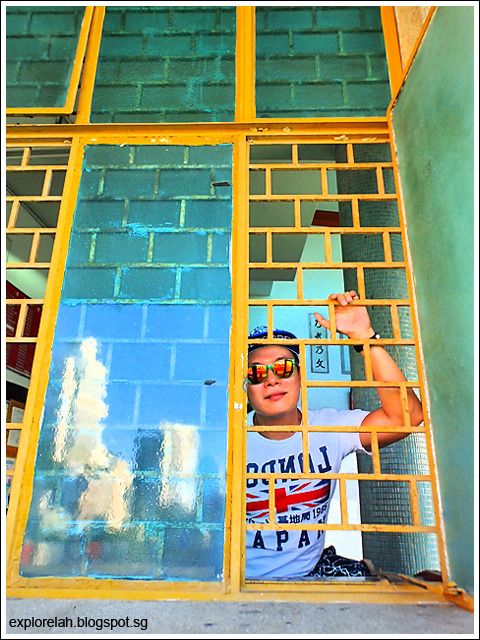
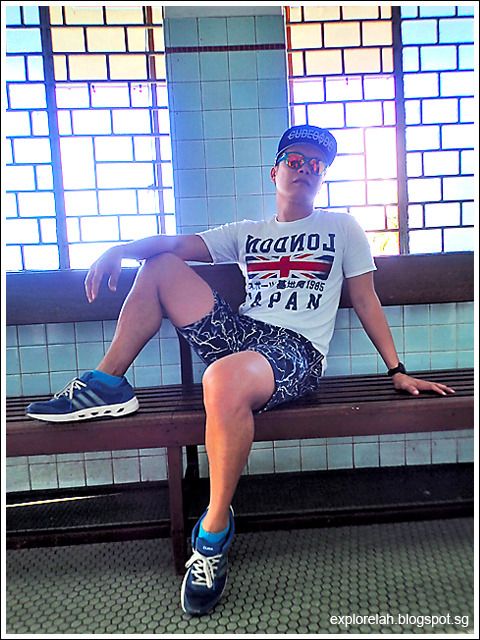
Because of its unpretentious ode to a forgotten period in history, Chin Woo Stadium makes for a great location for cam-whoring. There is really nothing much else to see or do here except take photos of the historic building and you in it.

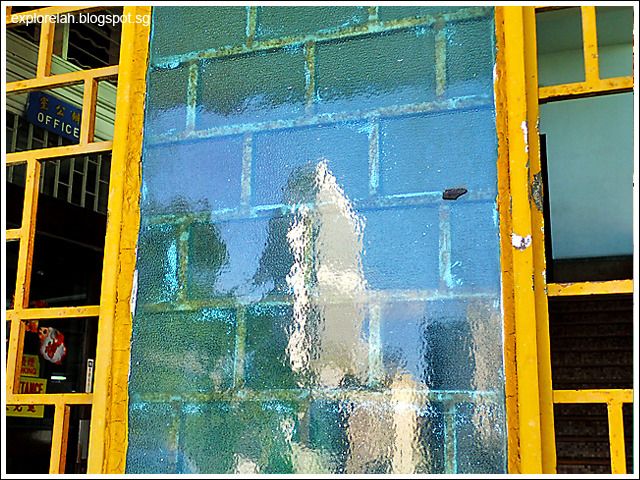
A reflection of KL's youthful skyscrapers on the wrinkled glass of Chin Woo Stadium.

The best time to visit is around sunset when the retiring sunshine strikes its golden rays on the face of Chin Woo Stadium. We arrived at about 5:45pm and the lighting angle was perfect.

"This is not a tourist attraction place," chided a staff at the stadium. Indeed, Chin Woo Stadium still serves as a sports club for paying members so do be respectful when visiting. We were only allowed to explore the ground level with the upper levels being out-of-bounds for non-members.

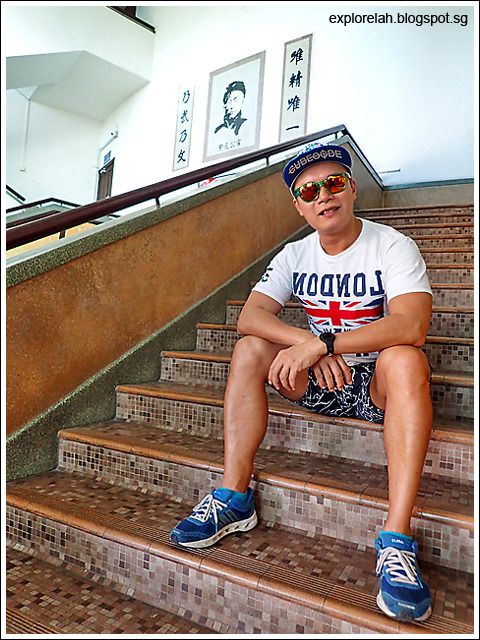
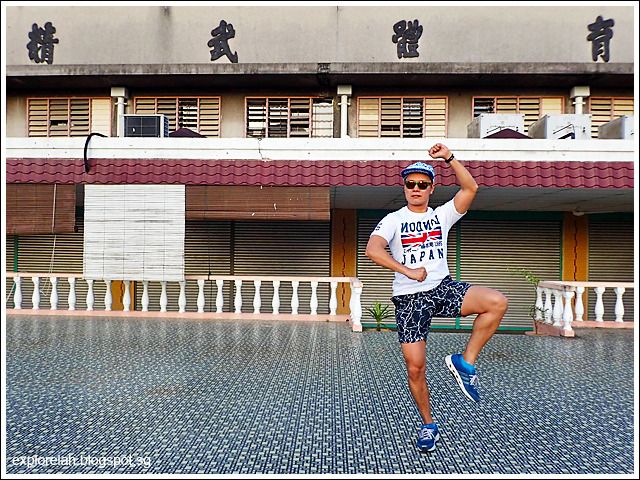
It's Kuala Lumpur. My t-shirt getting it all wrong about where I am... and I'm trying very hard to summon Justin Bieber in my 41-year-old body lah!

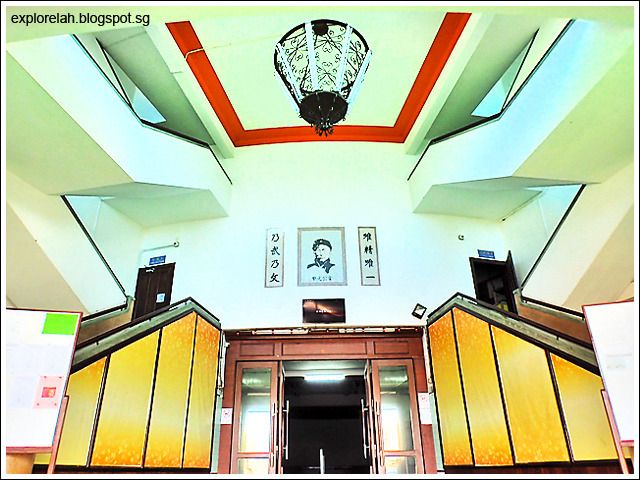
The portrait behind me is that of Huo Yuan Jia (霍元甲), the co-founder of the Chin Woo Athletic Association.

First level foyer of Chin Woo Stadium.

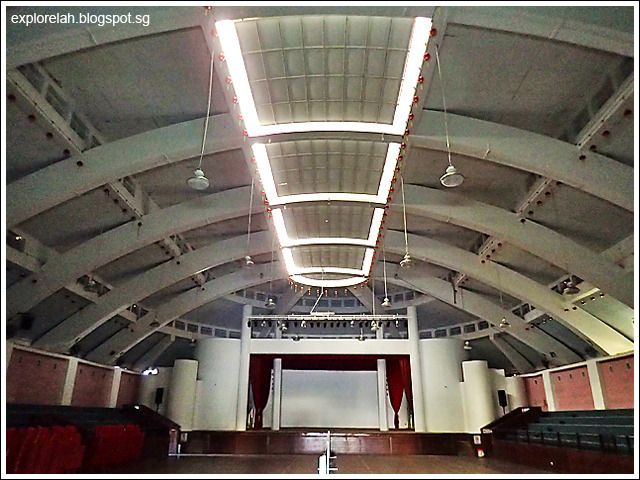
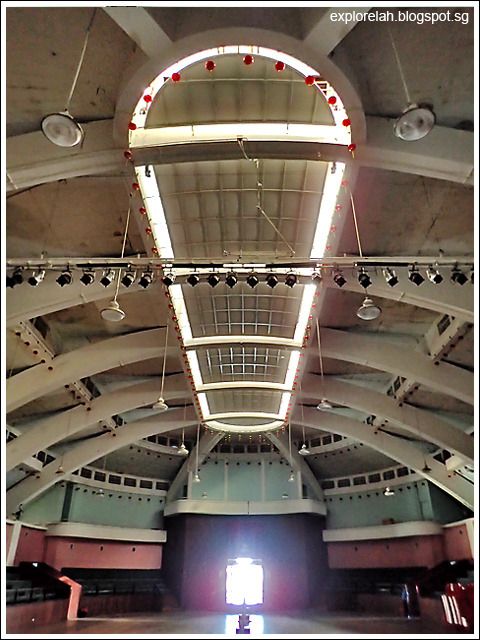
Interior of Chin Woo Stadium.

A rim at the ceiling lets in natural light. A simple yet brilliant design to save electricity.

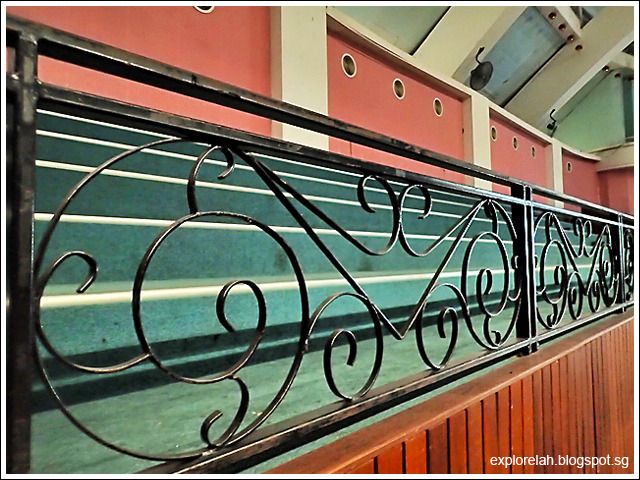
Getting a dose of retroliciousness with the wrought iron decor that's all the rage in the 80s.

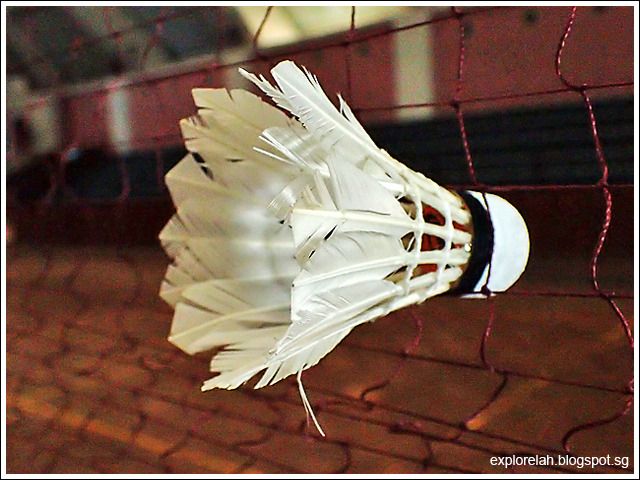
The 'stadium' is actually more of a multi-purpose / badminton hall with an adjoining swimming pool.

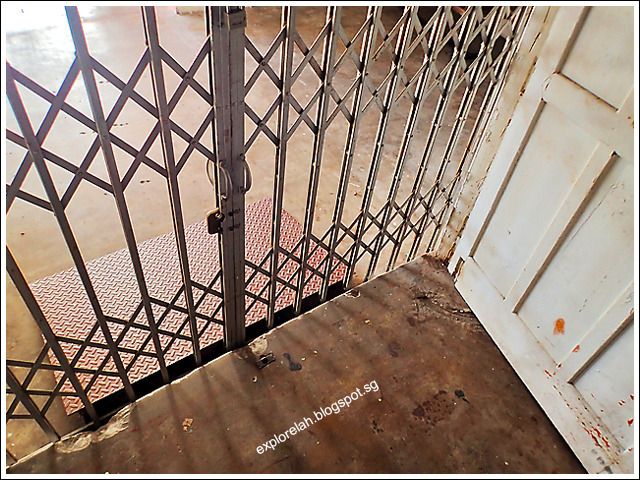
Getting into a corner with the yesteryear folding gate grille design that I grew up with at my maternal grandfather's shophouse along what used to be known as Gor Beh Lor (Fifth Road) in Singapore's Bencoolen district.

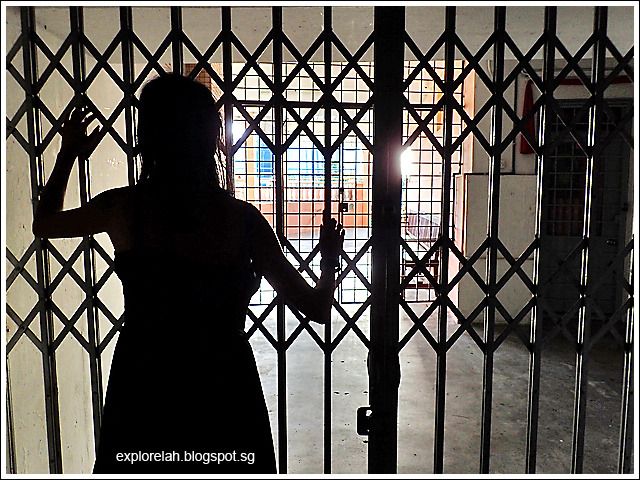
Sometimes we lock ourselves up in the past. Because it is something we know. What we know is safe. Or is it?

On the open air second level porch of Chin Woo Stadium where the toilet is. Our cam-whoring here was short-lived as the security guard promptly chased us away. So here I am trying to be I -Don't-Know-What before being escorted away by security.

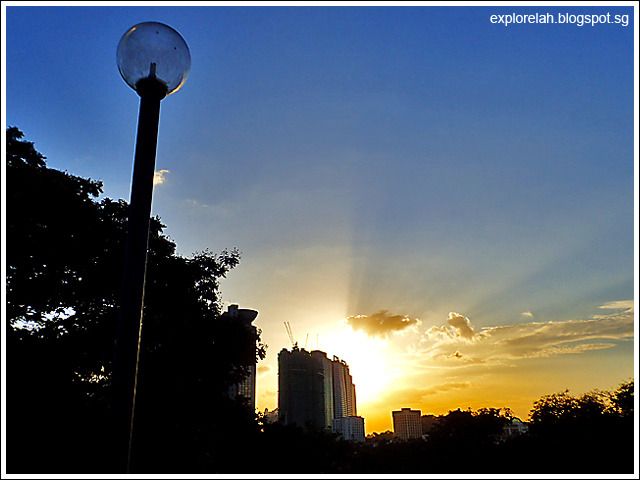
Chin Woo Stadium is touted as an ideal spot to watch a sunset over KL but the month we came (December), the sun went down behind a building and it was a no-show.

Nevertheless, it was a one-of-a-kind mini adventure that brought on a big experience of stepping back into a bygone era that's authentic, unpretentious, and bell-bottom classic!

20 March 2015

Pattaya - The Sanctuary of Truth

Date of Exploration : 11 Mar 2015

Like a fan following the works of an author or movie series, I've recently completed something of a travel trilogy with my visit to The Sanctuary of Truth in Pattaya. An exquisite monument that pays homage to traditional Khmer architectural stylings while being imbued with Buddhist and Hindu iconography, The Sanctaury of Truth (I shall call it The Truth for short) is one of three religious-cultural attractions conceived by Thai business tycoon, Khun Lek Viriyaphant. The other two attractions financed and owned by Khun Lek are Muang Boran and Erawan Museum, both located in the Samut Prakan province, which is within the jurisdiction of Bangkok.

Unlike franchise-chain attractions that feature a basic entertainment concept duplicated across different markets with some localisations, the trio of attractions by Khun Lek are vastly distinct although their founding philosophies of preserving Thai religious heritage and architectural traditions mirror each other. The result is three places of interest in Thailand that enthrall in different ways... at Muang Boran, you will find a sprawling collection of definitive Thai architectural replicas across the Kingdom spanning the Ayuthayan period to more modern times; while Erawan Museum takes visitors on a transcendental journey through the three realms of existence from the underworld, earth and heaven all housed within a whimsical musicbox-like building crowned with a three-headed elephant; and The Truth is an intoxicating blend of mastery in handcrafted carpentry with enlightening percepts of Hindu-Buddhism.
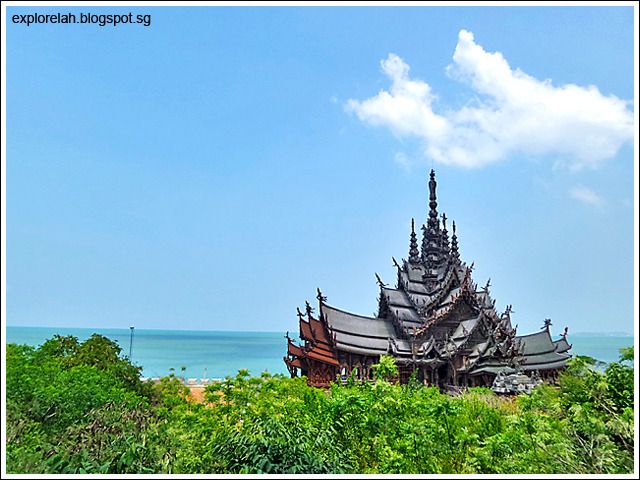
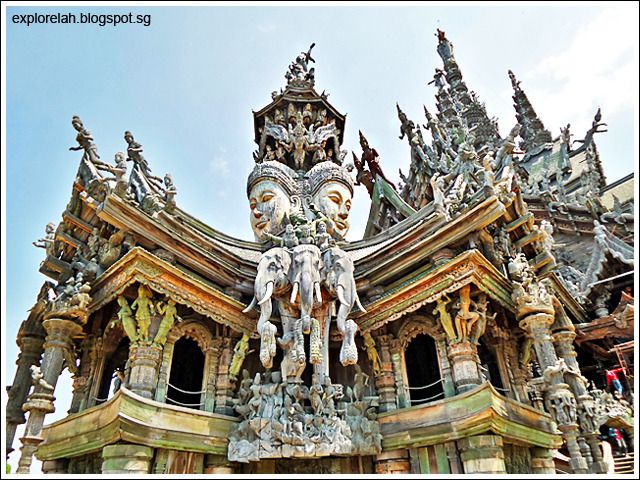
A vision by the sea. The tiered roof of The Sanctuary of Truth pierces the landscape of Pattaya's northern coastline with an understated majesty.

Visiting The Truth is my main reason for coming to Pattaya. From my visits to Muang Boran and Erawan Museum, I've come to expect nothing but to be fascinated by Kun Lek's imaginative aspirations in cultural philanthropy and the bewildering artistry of the built monuments.

Getting to The Truth

Packages are available at most hotels and pop-up travel booths along the streets of Pattaya for about 800bht for a half-day tour. However, it is not difficult to visit The Truth on your own with public transport.

Pattaya is divided into 3 sections - North, Central, and South. From North to South, it's about 8km. The Truth sits at the tip of a beach in the North in a district known as Nak Lua. I was staying in the South Pattaya near the Walking Street and intended to take a taxi to The Truth (cost between 250 - 300bht one way; better to take taxi if there are 4 in your group) but after chatting with my hotel's receptionist, I was told a cheaper way to get there since I'm travelling solo. Here's how :

1. Take a song taew (also known as 'baht bus') from South or Central Pattaya to Dolphin Roundabout. The drivers all know this roundabout and it costs 10bht.

2. From Dolphin Roundabout, cross over to the side of Nak Lua Road (next to Dusit Thani Hotel) and board another song taew (10bht). The song taews have no 'bus' numbers to indicate their routes because they basically just travel down the main roads, make a loop and turn back and travel back and forth. You just get on or off along their fixed route.

3. On Nak Lua Road, look out for Nak Lua 12 (which is a side street) and get off. On Nak Lua 12, look for a motobike 'taxi' and get it to take you to The Truth. The ride is about 5mins and should cost between 40-50bht.
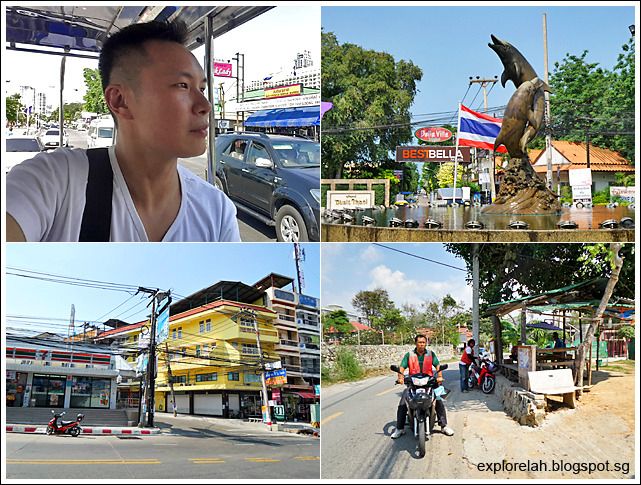
From South Pattaya, I took a song taew (baht bus) along Second Road to the Dolphin Roundabout, crossed over to Nak Lua Road and took another song taew to Nak Lua 12. From Nak Lua 12, I took a motorbike taxi to The Truth. Total travelling time approx. 25 minutes without traffic jam. Total cost one way : 70bht. It sounds complicated but it's actually pretty easy and a great way to experience local transportation modes.

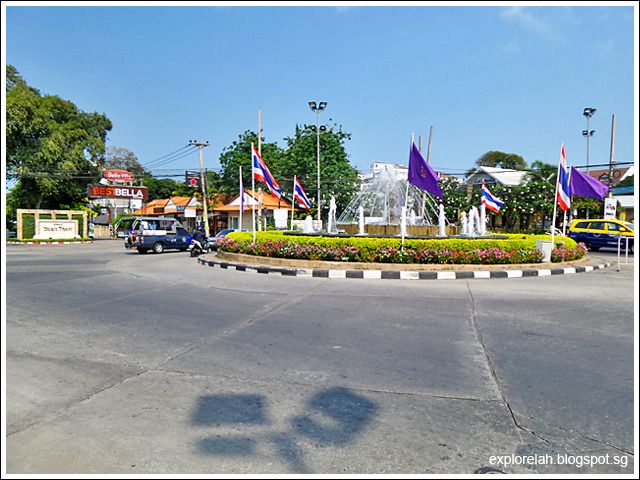
Dolphin Roundabout at North Pattaya Road. If you are not sure where to get off, tell the song taew driver to let you know or better yet, use Google Maps and type in "Dolphin Roundabout" to track where to get off if you bought a local traveller's SIM card.
Arriving at The Truth

The Pattayan attraction is tucked inside a small lane (Nak Lua 12) with an understated entrance that looked more like a gate to the Thai embassy than a tourist attraction.
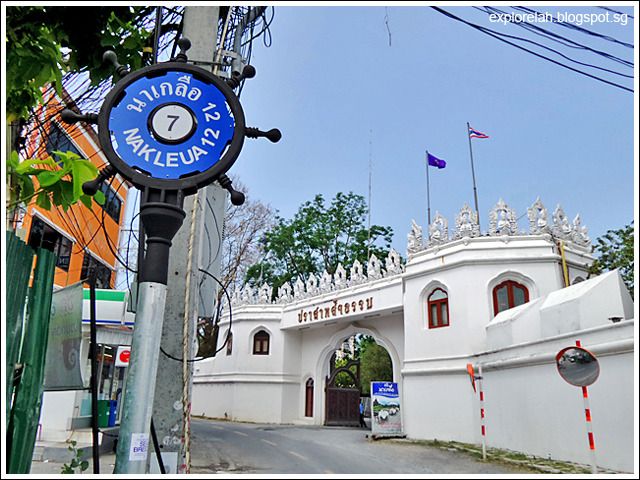
Entrance of The Sanctuary of Truth. Opposite the entrance is a convenience store where you can buy drinks or an ice-cream to cool off before exploring The Truth. Behind me from this road sign is a rest area for motobike taxis which you can hire to take you back out to Nak Lua Road to catch a song taew after your visit.
It costs 500bht (adult) for foreigners to enter The Truth and the staff will try to upsell you an elephant, horse or boat ride to tour the park grounds at a cost starting from 800bht which includes entrance fee. I went with the basic 500bht option although I think the boat ride would provide an interesting vantage point to appreciate the monument from the sea. But I'm cheap. Ha.

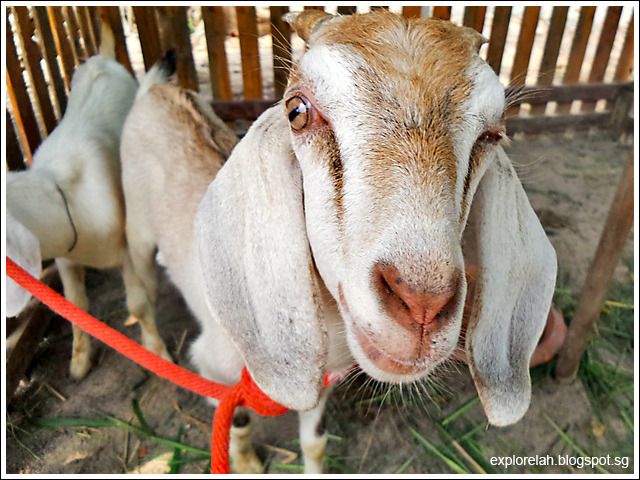
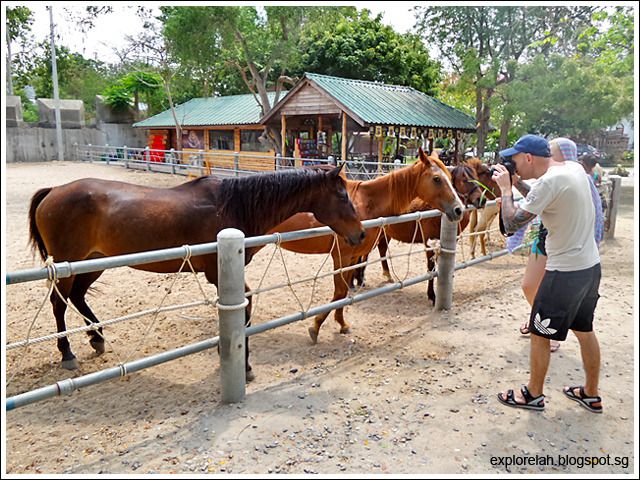
The Truth is not immediately visible from the entrance and we had to walk through a goat pen and stable before reaching the main building. I thought the close encounters with the farm animals were a rather cute welcome.

You want to meh-ess with me? Feeds for the goats can be purchased at a shed next to the pen.

Steedy, pose!

Elephant rides are available for hire to go around the park if you want a taste of transportation in the olden days.

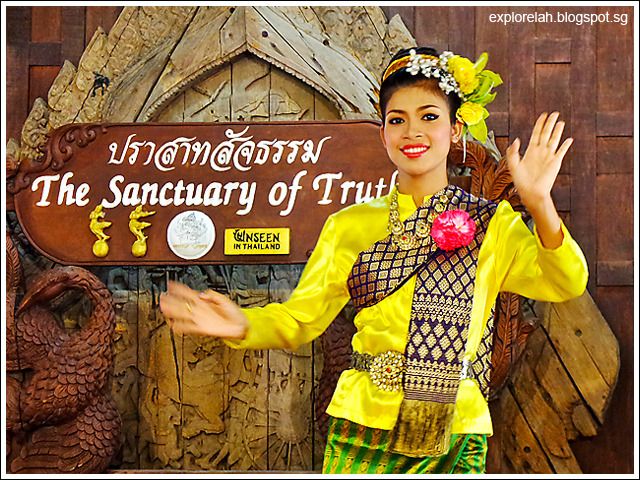
A cultural dance performance that features a variety of dance styles served as appetisers before visiting The Sanctuary of Truth building. This pretty dancer reminds me of Anne Heche with her beautiful bright eyes.

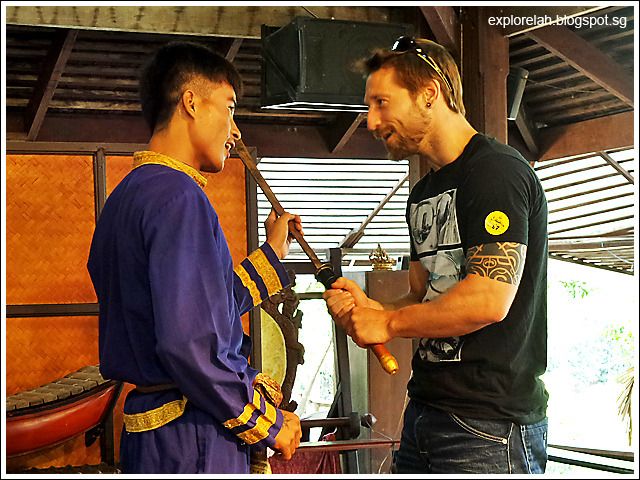
A Thai martial arts sequence interspersed the dance performance and audience participation added an element of unpredictability to the show. This ang moh is a natural at being a comedian and he's so funny by pretending to misinterpret everything he was told in a sword fight scene!

Framing The Truth

It's very tempting to immediately head towards the main building upon seeing it but reign in the enthusiasm a little and walk around the park area surrounding the monument and you may find some interesting foreground to frame The Truth.
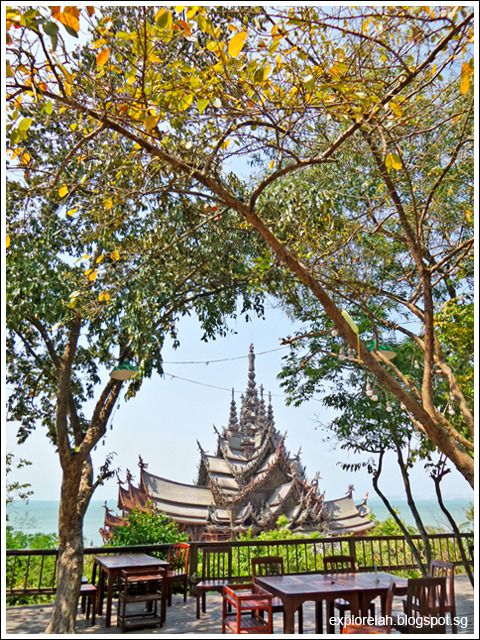
This is the first glimpse of The Truth building after a short walk from the entrance.

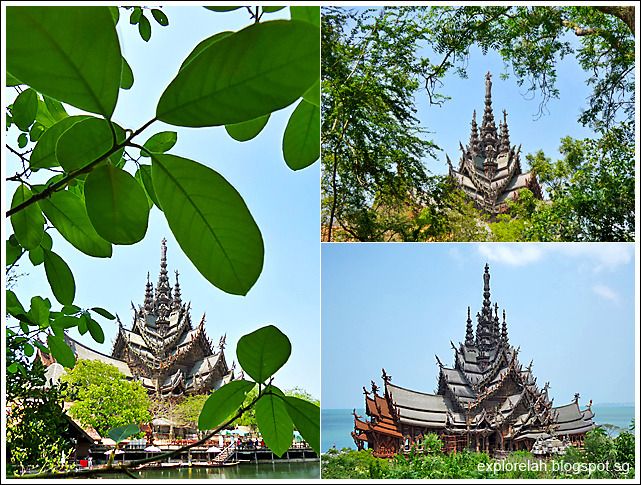
There's a neglected garden with a lake on the way to the monument's front entrance which presented some interesting opportunities to frame the building through lush foliage. Walk around and find your photographic angles.

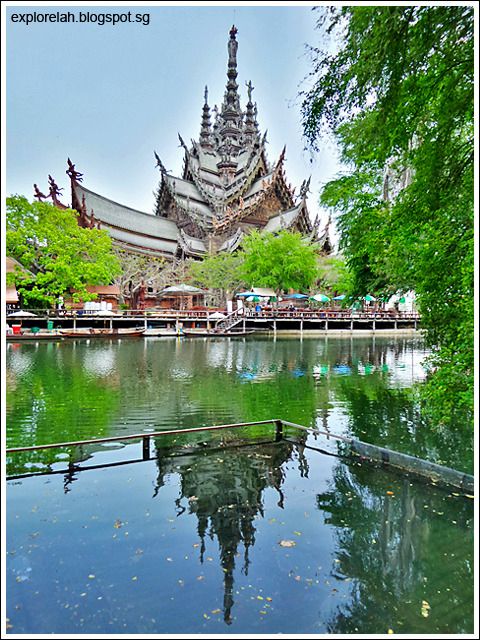
From framing with leaves to reflection in a small lake, there are quite a number of ways to photograph The Truth before reaching the monument.
On the Surface of The Truth

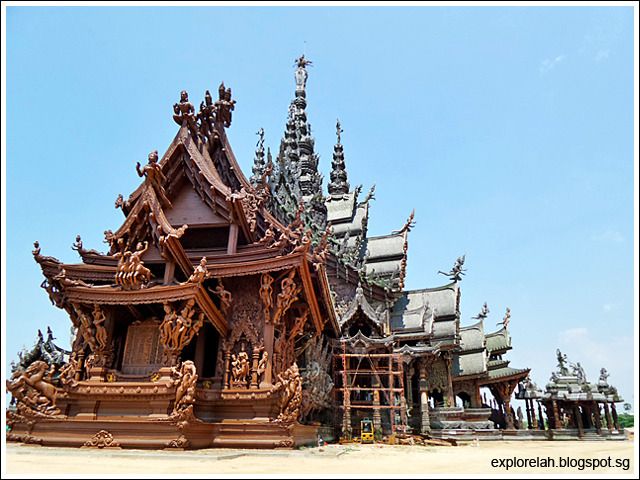
Building started in 1981 and continues to today with 70% of the monument being completed. The remaining 30% is slated for completion over the span of another 30 years. Even though scaffolding mars some of the exterior as well as interior parts of The Truth, the building is still a stunning visual masterpiece. The ostentatious monument is built entirely out of wood which comprises red wood, mahogany and teak. That's why the monument has different colours varying from grey to brown to deep ochre. Some parts look green and they are actually 'diseased' wood due to termite infestations and will be replaced.
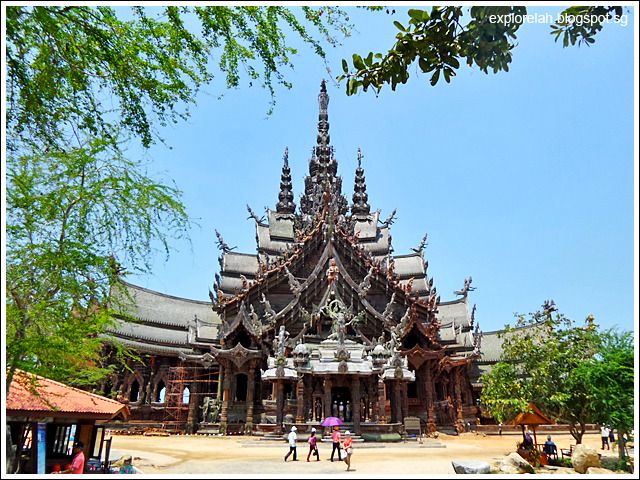
Main entrance of The Truth monument.

Different colour variations arise as a result of different wood used in its construction and the different age of the various parts as building has been ongoing for more than 30 years.

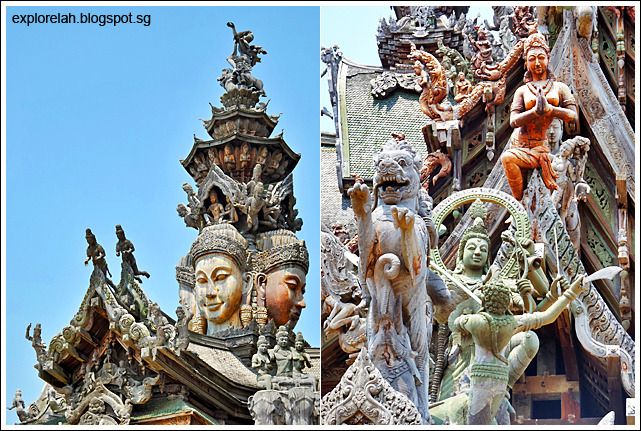
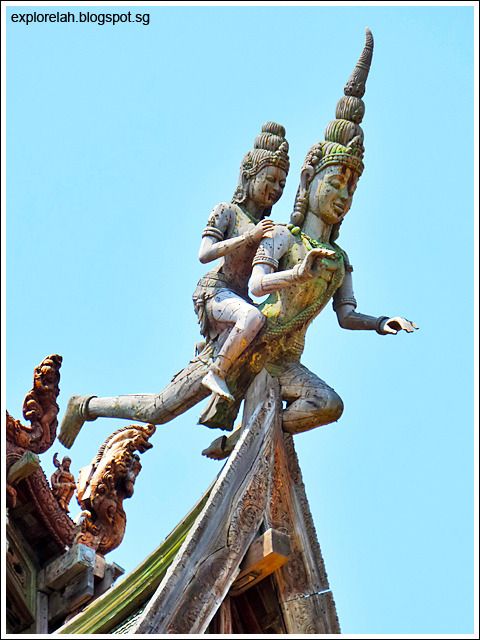
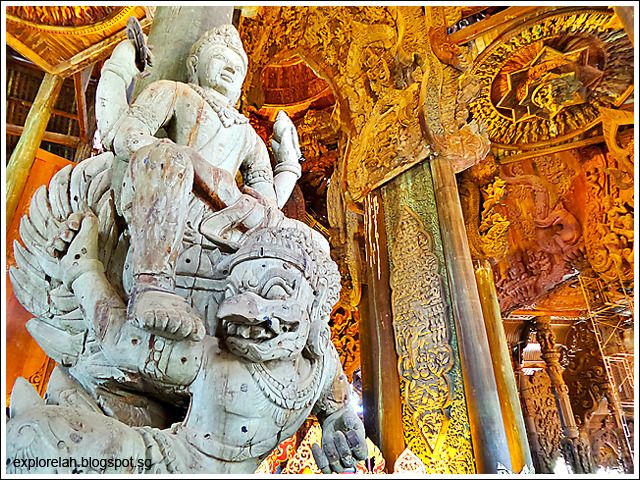
Everything from the building's structure to its adorning statutes are crafted by hand. Look out for the 4 faces of Bodhisattava that sits on the back roof, The four faces represent Love, Kindness, Sympathy and Equality.

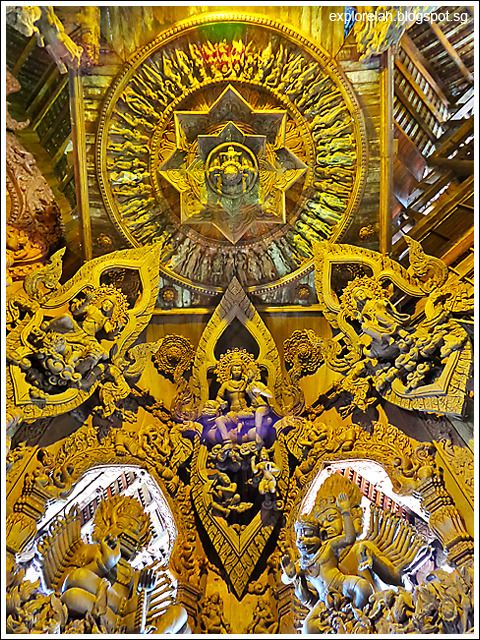
Not a moment for the eyes to rest looking at the ornate roofing. But wait till you see the inside.

This looks ouch. Apparently, no nails are used in the construction and assembly of the monument.

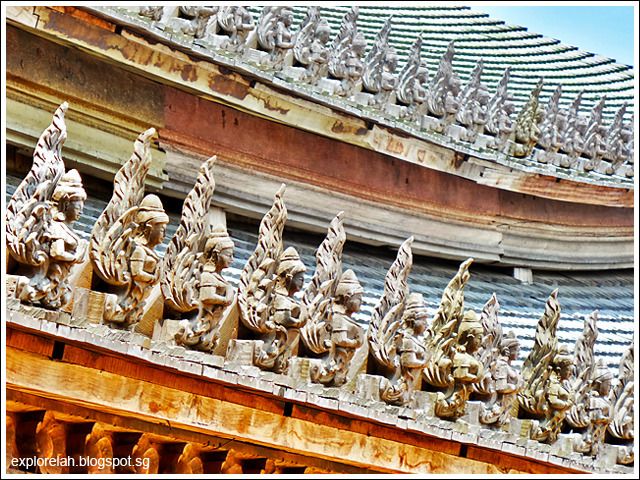
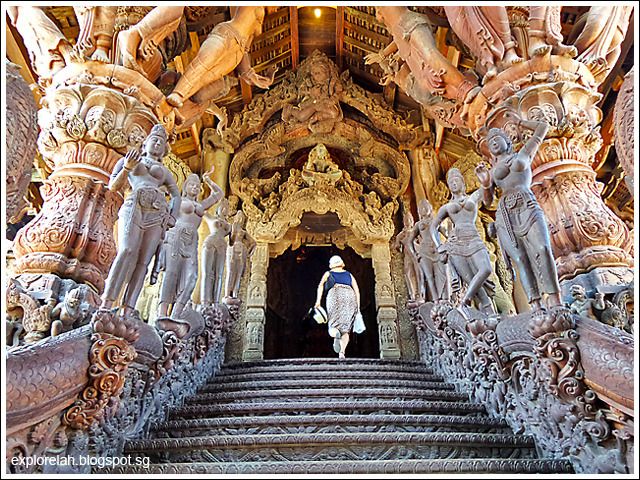
Rows of hand carved celestial maidens lining the roofs. No two are alike.

No empty spots on the wooden canvas. Those that are empty are yet to be filled up. There's no end to the carvings, creating an encounter with the monument that is both intimidating yet marvellous.

A closer look at the carvings that brings to life the characters and scenes from Thai, Indian, Chinese and Cambodian religious myths and legends.
The Heart of The Truth

Just looking at the building's exterior, I was already overwhelmed by the intricacies of the woodwork. But that's only the tip of the iceberg because once inside and looking at the carved decorations upclose, my mind got boggled by the sheer ingenuity and skill in turning pieces of wood into a massive work of art.

But more than just a visual spectacle, The Truth holds nuggets of Hindu-Buddhist wisdom that enlightens the mind and liberates the soul. A couple of my favourite lessons I took away from the visit are :

- The body will be ravaged by time and deteriorate but truth and goodness are immortal.
- There are 3 things that cannot be hidden - the sun, the moon and the truth.
- Materialistic pleasures are superficial and external joys. True happiness comes from intrinsic spiritual fulfillment.
- Every belief, religion and philosophy is just a different way of reaching spiritual fulfillment.

Central to the guiding theme of The Truth is that of "family" as there's no higher order of love than that which exists within a family between spouses and offsprings. A parent's love for a child is all sacrificing and unconditional and that represents the purest form of truth where the heart is open and there is nothing to hide.

Entering the truth. There are four entrances, each at a cardinal direction, but not all are open or as ornate as the main one behind the statue of the family.

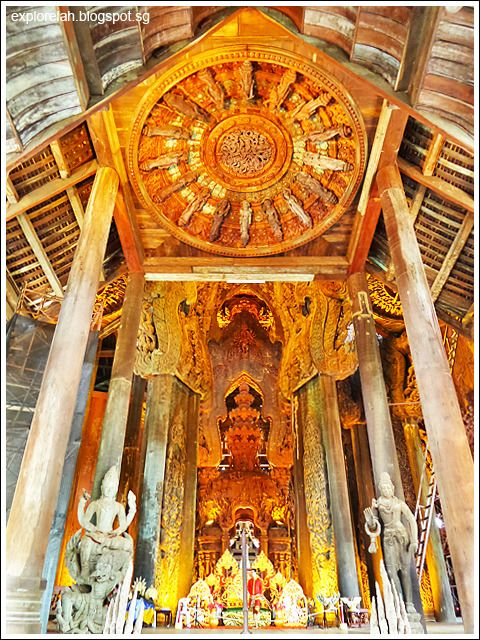
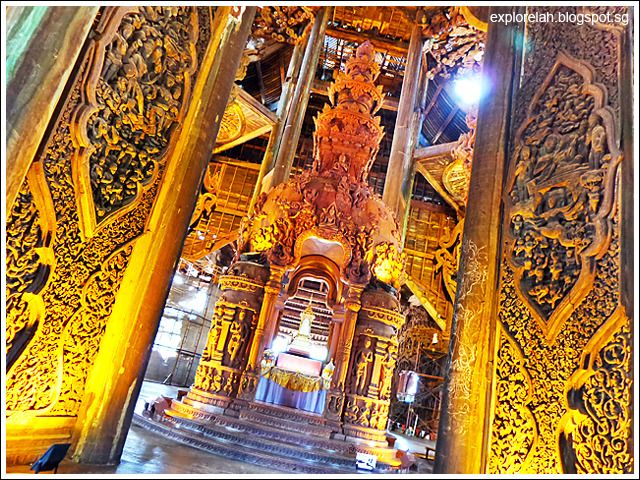
Central hall of the monument. It's one of those gasp-worthy scene.

It's hard to tell where one carving begins and the other ends.

At the heart of the sanctuary is an exhibition of Buddha tooth relics. The monument does not serve as a place of worship or shrine but locals do come here to meditate and seek divinity.

Ceiling adornments in the inner hall. It would be so cool if the sculptures are mechanised and they start moving their arms and heads or some of the statues can rotate so that we can see all sides of the multi-faced buddha!

Lots of religious sculptures topless celestial maidens with ample breasts pole dancing within the monument.

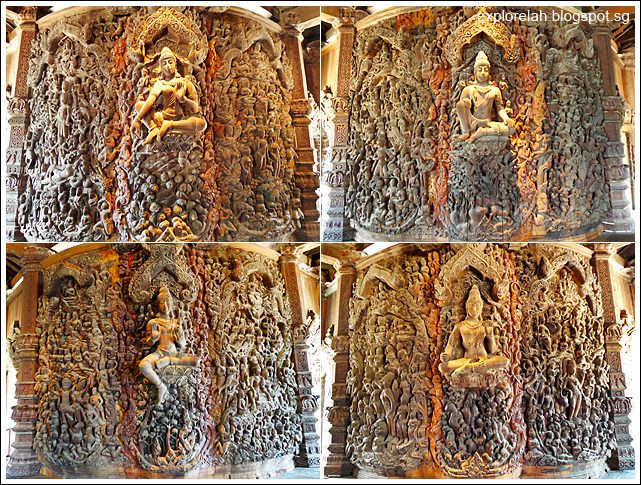
One of the key exhibits is a four-walled carving that represents the central gods in Hinduism - Shiva (god of earth and fire), Vishnu (god of water), and Brahma (god of wind). These four walls encapsulate the Hinduism concept of creation, maintenance and destruction.

You can identify the god by looking at the carvings around him. If there's a dragon, which breathes fire, that's Shiva, while Brahma has carvings of clouds beneath him.
The Hard Truth

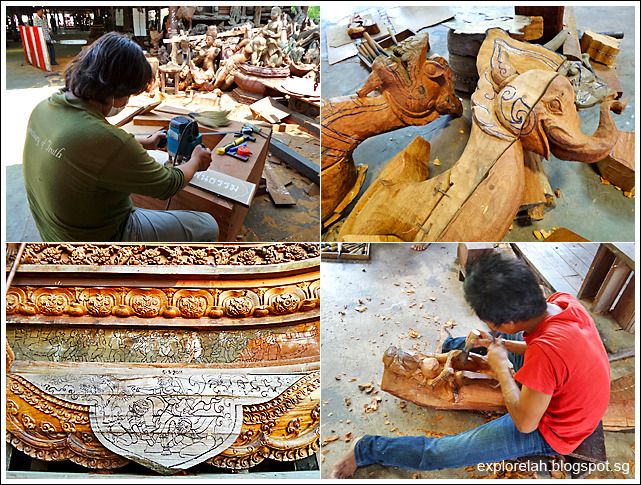
Although The Truth monument is not as big as I imagined it to be, it's colossal in terms of ambition in what it has achieved. A project of such scale is an institution in Pattaya that employs the skills of many craftsmen and women for its realisation. For a behind-the-scene look at the arduous work that goes into carving the statues, wooden laces and gopuras that make up The Sanctuary of Truth, take a walk to the nearby workshop for a peek at where all the magic happens.

Gouge, sweep and chisel... blocks of wood emerges as a sculpture or relief under the hands of masterful carvers. I can never visualise how I could turn a block of wood or stone into a person or animal.

Truth in the making as craftsmen create more works to be added to the monument.

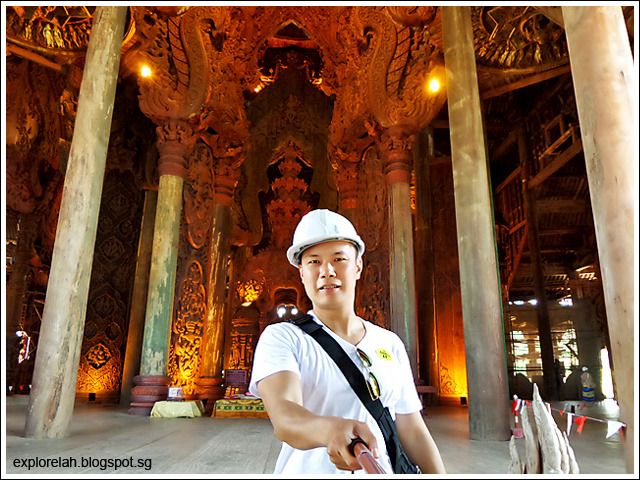
Due to the ongoing construction works, wearing a hard hat is a must when visiting The Sanctuary of Truth. Also wear insect repellent as there are quite of bit of mozzies waiting to feast.

Having been to the other attractions that Pattaya has to offer such as the beaches, Big Buddha (Wat Khao Yai), Walking Street, Nong Nooch Tropical Garden and Pattaya Floating Market, I would say that The Sanctuary of Truth is definitely a must-see if there's only time for one attraction here. It is quite possibly the Sagrada Familia of the East!

The Sanctuary of Truth

Address : 206/2 Moo 5, Soi Naklua 12, Naklua, Pattaya, Bang Lamung District, Chon Buri 20150, Thailand
Related Posts Plugin for WordPress, Blogger...