01 September 2012

Taiwan (Chiayi) - Living Like Royalty at Nice Prince Hotel


Date of Stay : 20 Aug 2012

Before the heavenly bliss of a self-planned holiday can rejuvenate the tired soul, there are three necessary evils that must be first exorcised - booking an air ticket, searching for accomodation, and researching on attractions. This trinity of prep work can start us out on our vacation before we even get there, but that's provided we have the time to scour the internet for great deals, reviews, recommendations and way-finding. Researching and planning a trip, especially if it's a long one, can turn into a full-time job for days. And for the kiasu traveller like me, for weeks.

Of the three, the easiest to decide on is the ticket. So long as the price and departure times are right, booking a seat is very straightforward. The real headache comes from choosing where to stay and how to play.

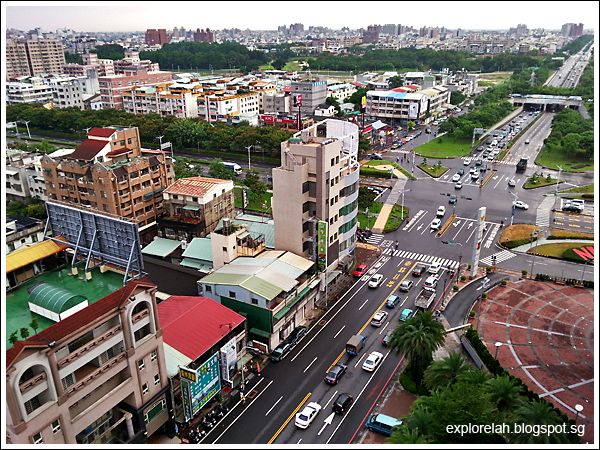
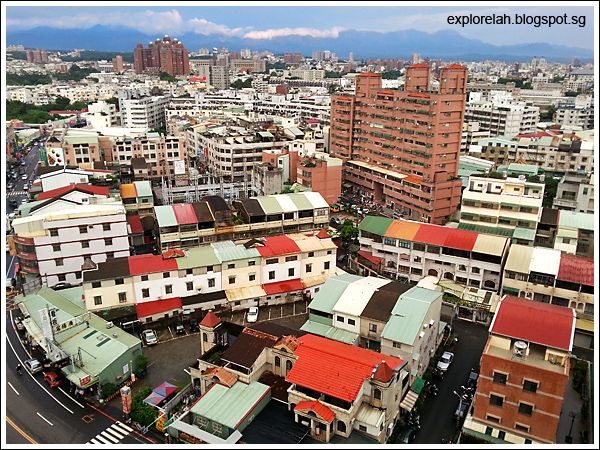
During this trip to Chiayi, Taiwan, I stayed at Nice Prince Hotel (耐斯王子大饭店), a most distinguished hospitality landmark situated right at the heart of downtown Central Taiwan (Taichung). The hotel towers over the city and offers a spectacular view of Chiayi county rimmed by the jagged ribbon of Alishan (阿里山) and Yushan (玉山) in the distant horizon... A truly NICE vantage point fit for royalty indeed!
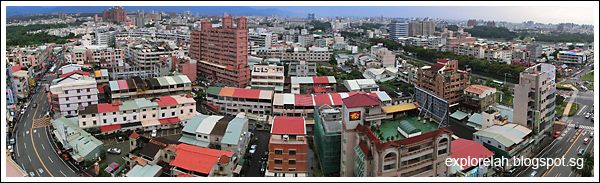
Panoramic view of Chiayi city from my room's balcony at Nice Prince Hotel.

Rising over the area as the tallest building, Nice Prince Hotel offers more than just a jaw-dropping aerial view but convenience with its prime location. A huge shopping mall and great eats are within walking distances.

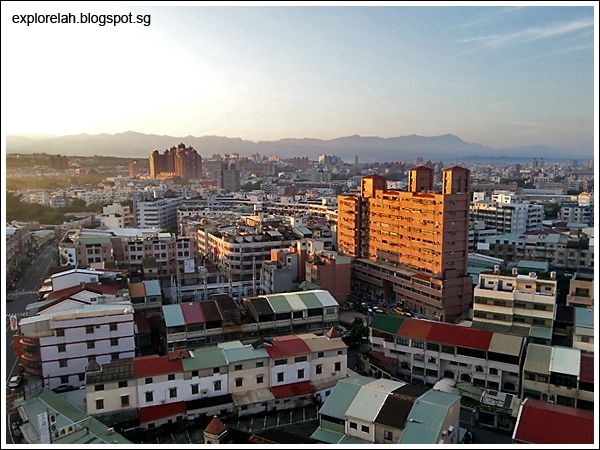
The smoky silhouette of undulating mountain ranges invoked a mega sense of awe within me. And also a little dizziness from the height. Heh heh.

This photo was taken at daybreak. A magical quality hung in the air as sunrays slowly illuminated the city while the mountains take shape.

This is my second time to Taiwan and my first time spending a night in Chiayi, the gateway city to Alishan (Mount Ali). To get to Alishan, you have to first set foot in Chiayi, Taichung (Central Taiwan). Inspiring poets, songs and paintings, Alishan is the nation's star tourist attraction that shouldn't be missed.

But planning a visit to the mountain can be something of a rocket science. Public transport into the mountain seems non-existent or you have to adhere to the two trip a day timing to get up and down the mountina. An alternative is to book a taxi to bring you up the mountain, spend a night, and take you down again. However, that can cost quite a bit especially if you want the cab-driver to take you sightseeing as well.

Sleeping All the Way to Alishan

Instead of fussing over transport and accomodation arrangements yourself, a great way to cut out the hassle and rev up the fun is taking a 2D2N package with Nice Prince Hotel to explore the top sights of Alishan. This really takes the pain out of planning for where to stay and what to play. Just book an air ticket, check-in to Nice Prince Hotel, and get an all-round experience of Alishan!
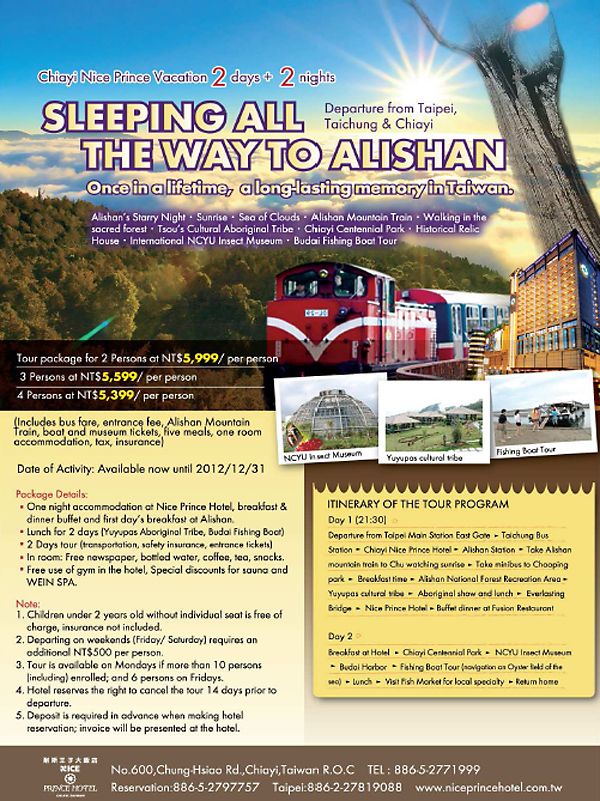


The special package is available from now till the end of 2012 and features a delicious and comprehensive line-up of sights and experiences that include an antique train ride up the mountain like what the early settlers used to do, catching the renown Alishan sea-of-clouds, sunrise, sunset, an excursion into the sacred forest, visiting the aboriginal cultural village, etc.

I think it's a really great value-for-money deal that doesn't require the formation of a big group to go.

Harmonising Culture & Modernity

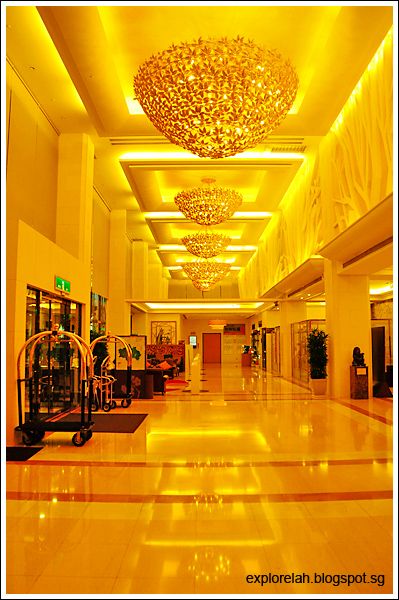
When I stepped into Nice Prince Hotel, my first impression was, "This place got flavour". It felt like I walked into modern gallery of folk art that steeped the atmosphere in culture without suffering a disjointed visual narrative with the modern interior.

Abstracts of Alishan's natural endowment and the mountain's indigenous Tsou tribe can be found at every corner of the hotel from permanent fixtures to huge installations to decorative accentuates.
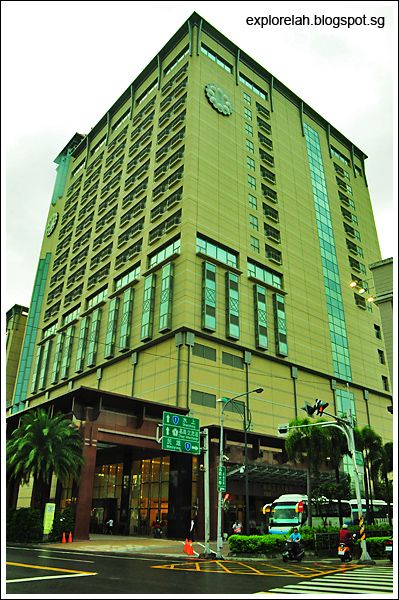

Opened in 2006, Nice Prince Hotel is the only 5-star hotel at the foot of Alishan.

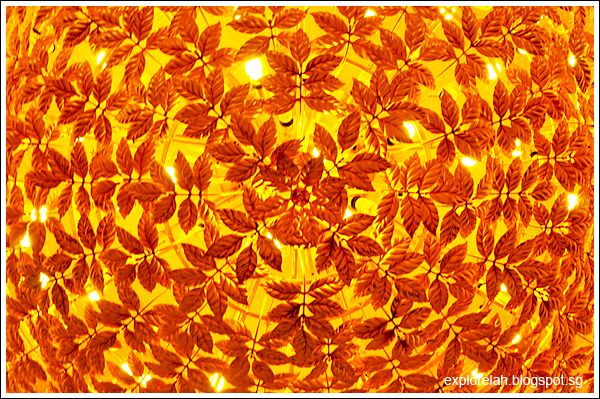
Leaves-encrusted chandeliers and embossed branches greet guests at the entrance foyer.

The leaves are fashioned after those of Cherry Blossom trees which are found in abundance on Alishan.

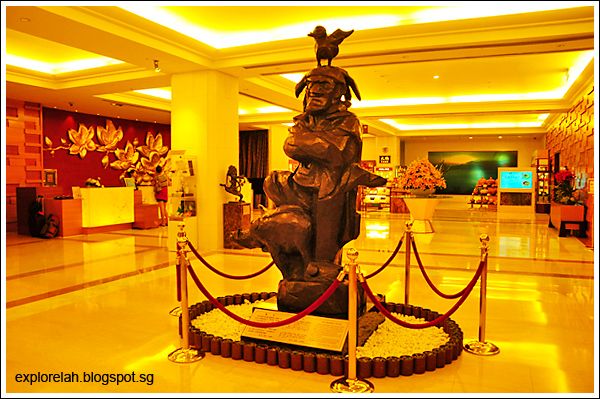
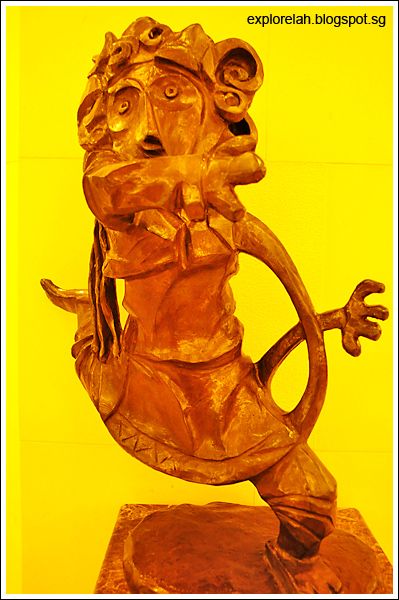
Sculpture of a Tsou warrior with a full harvest to confer love, peace and joy.

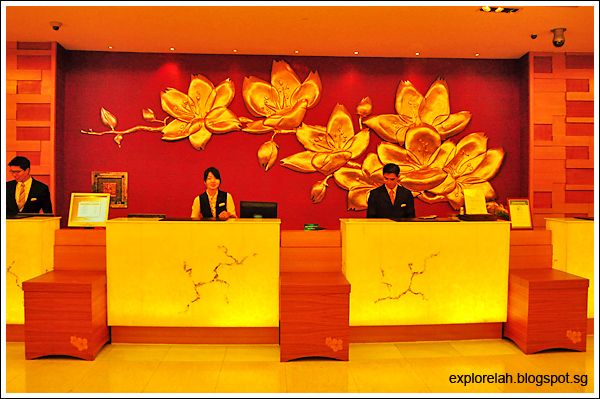
Gold cherry blossom motifs brings the smile of Alishan to the hotel's reception counter.


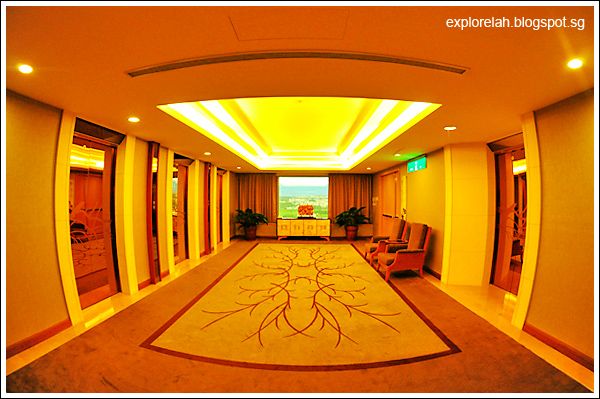
Lift landing area with an elegant hint of nature captured on the carpet.


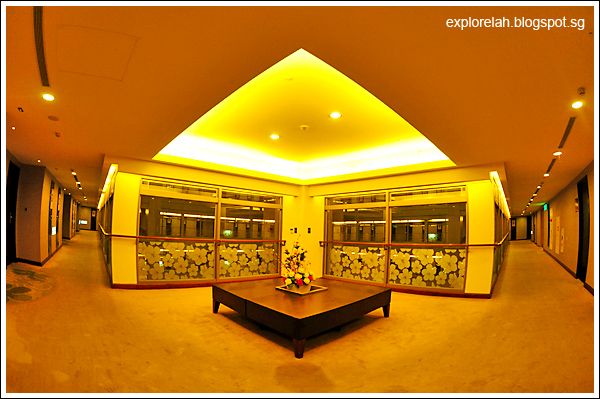
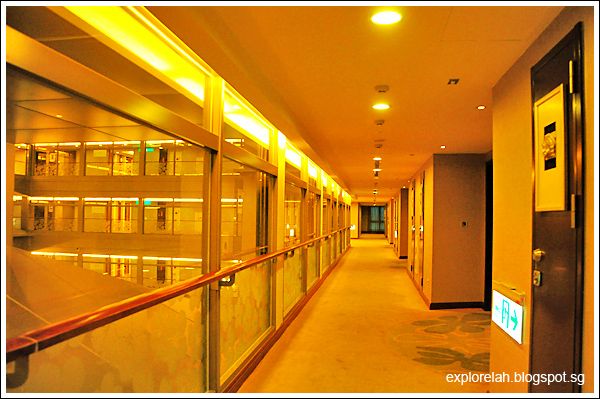
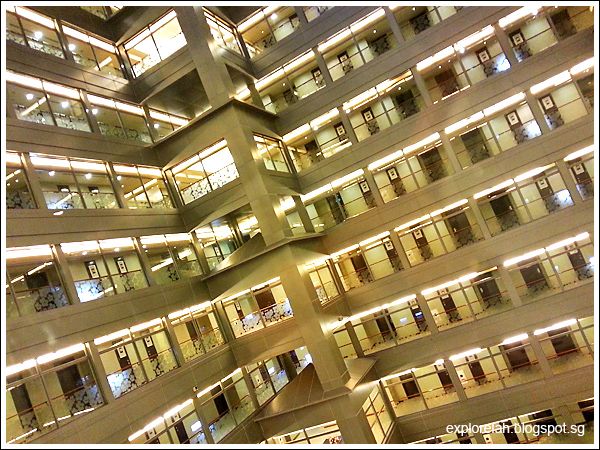
The rooms are lined on four sides to form a central well with a skylight on the roof.


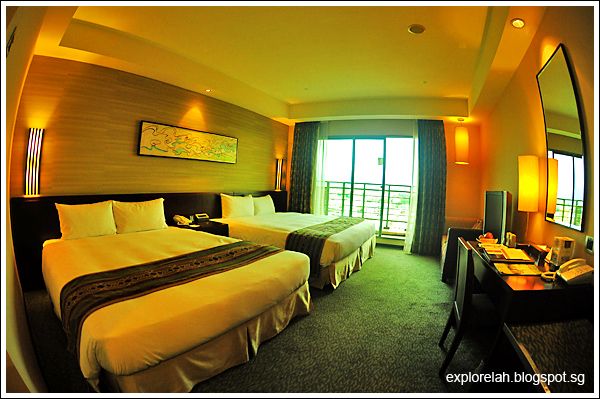
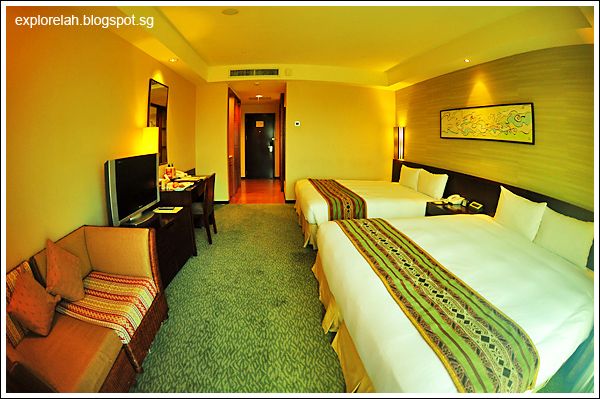
Derng derng derng derng... this is my huge and comfy room!

Tribal prints added that ethnic touch to a spacious and stylish setting. The beds are really comfortable.

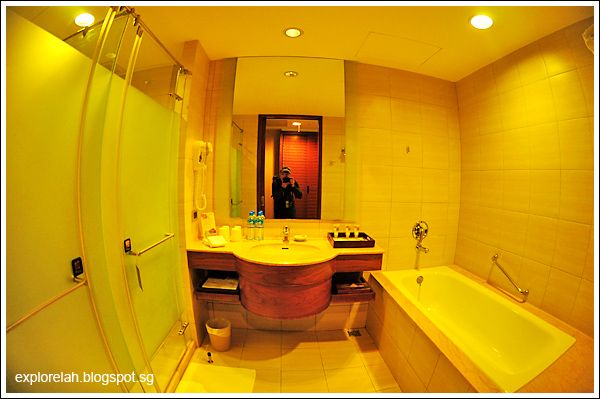
Huge bathroom with a full set of toileteries.


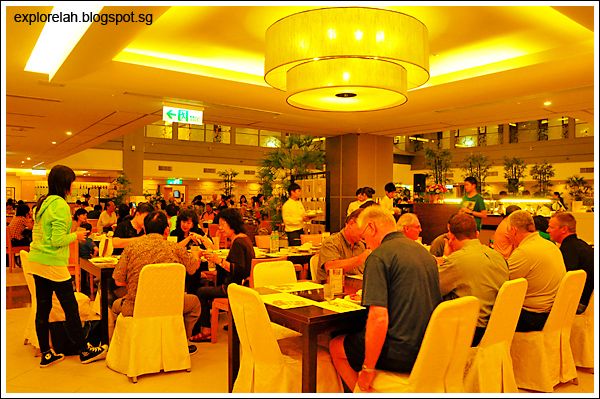
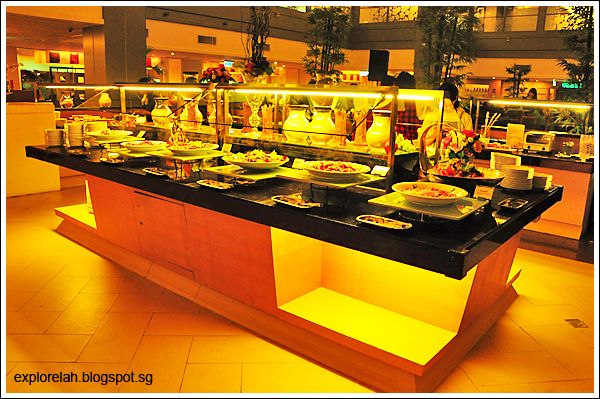
Nice Prince Hotel's main dining hall, The Fusion Restaurant, features an open concept buffet amidst a cosy dining environment.

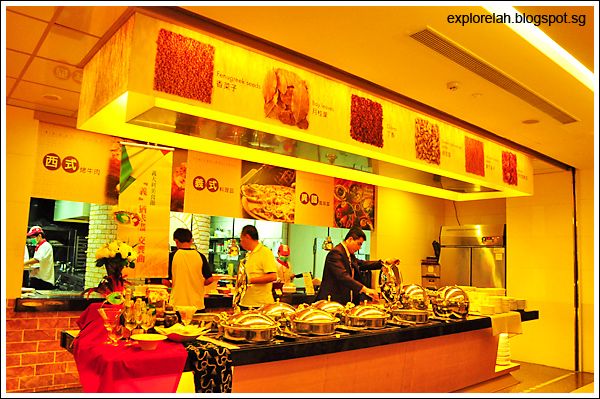
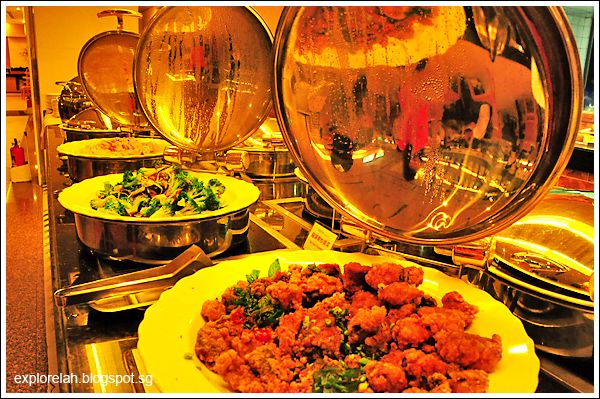
An unending selection of cuisines from all corners of the world can be found here. It's a foodie's wonderland!

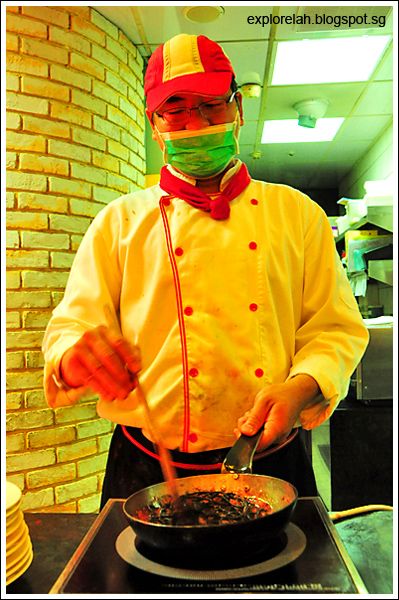
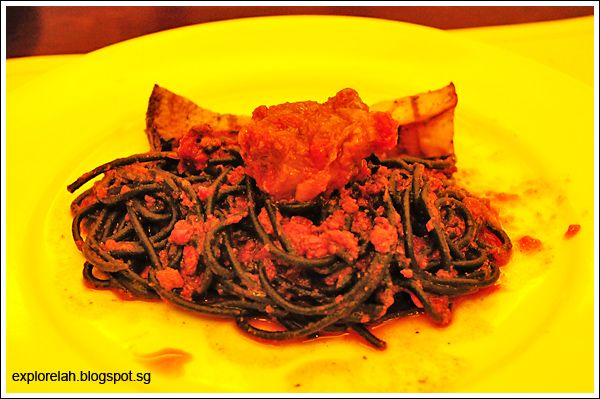
Fresh pasta being cooked on the spot. That's my squid ink spaghetti with meat sauce getting tossed by the chef. 

The different cuisines are well laid-out and clearly marked with signages as well as definitive decor that reflects the country of origin.

Did I already mention that the selection is truly mind-boggling?!


I highly recommend the squid ink spaghetti with meat sauce. Tasted like it had the fingerprints of fine-dine Italian restaurants all over it! Slurp!


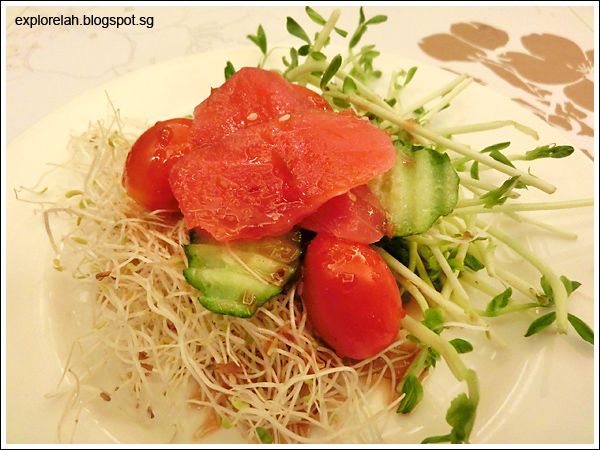
Create your own signature dishes at The Fusion Restaurant! I assembled a tuna salad with Japanese sauce with greens from the salad island and fresh sashimi at the Jap section. The quality of food is really good.

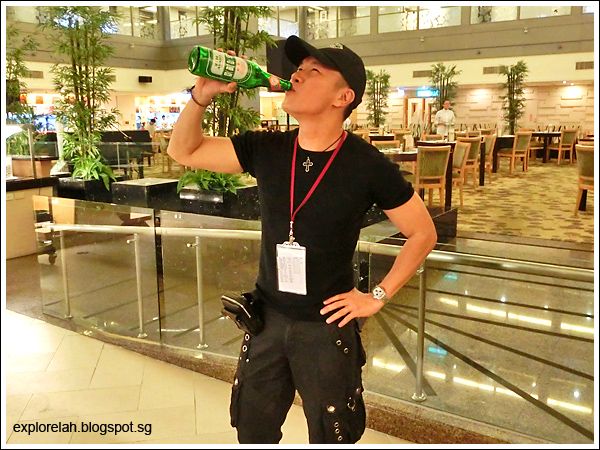
My first taste of Taiwan beer, an award-winning beer that the locals swear by.
For a luxurious experience of Chiayi and Alishan without bleeding the pocket, I think Nice Prince Hotel and its tour packages are one of the best deals around.

Other than Alishan, there are other natural and cultural attractions around Chiayi that would leave families and honeymooners with a lasting impression of Taiwan!

Nice Prince Hotel

Address : No.600,Chung-Hsiao Rd., Chiayi,Taiwan R.O.C

Tel : 886-5-2771999, Fax : 886-5-2732999

Email : servicenph@mail.janfusun.com.tw

08 August 2012

Singapore - Lian Shan Shuang Lin Monastery

Date of Exploration : 5 Aug 2012


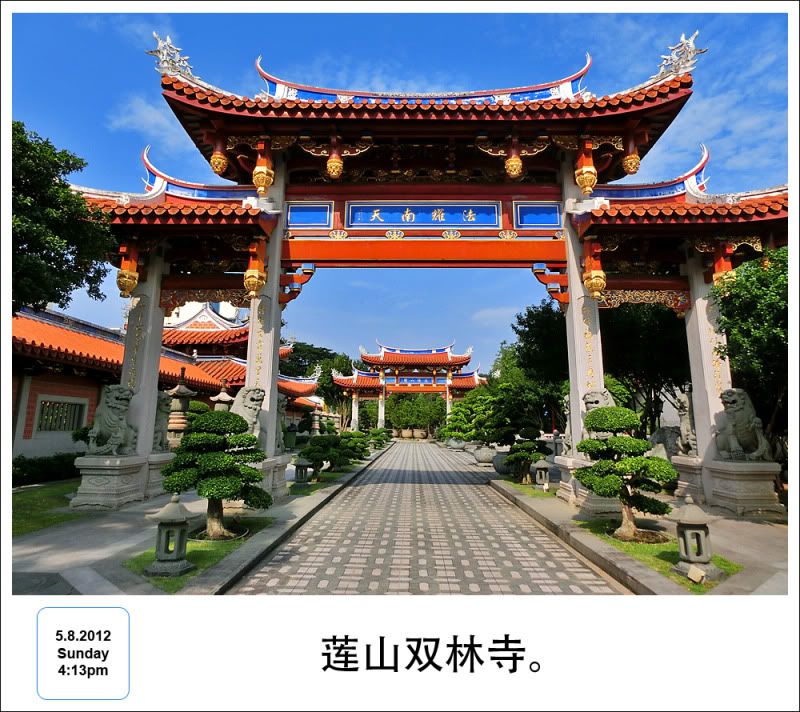
This used to be my playground. From age 8 to 28, I stayed at Block 195 Kim Keat Avenue, which is right next to Siong Lim Temple. That’s how I used to spell the temple’s name until 莲山双林寺 ‘Lian Shan Shuang Lin Monastery’ (Twin Groves of the Lotus Mountain Temple) emerged as its official name when I Googled today.

Back in those days, the temple grounds provided much enjoyment and playthings for us neighbourhood kids. It used to have a huge pond which we used to come by often to catch guppies and small shrimps as pets. The place was also overgrown with wild balsam plants and vegetation, providing endless hours of acquiring butterfly and spider specimens in addition to our aquatic keepsakes.

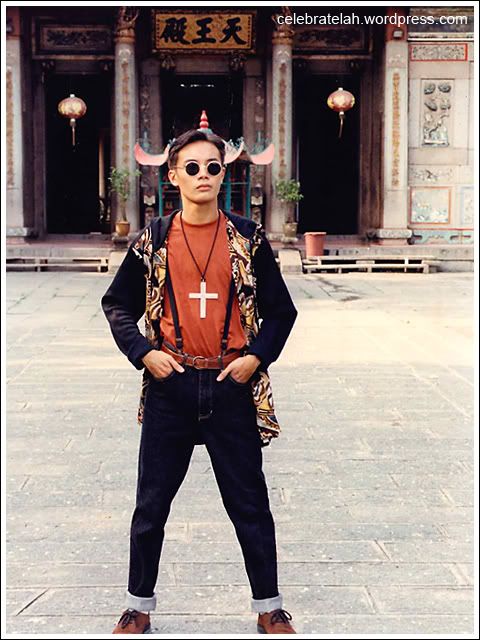
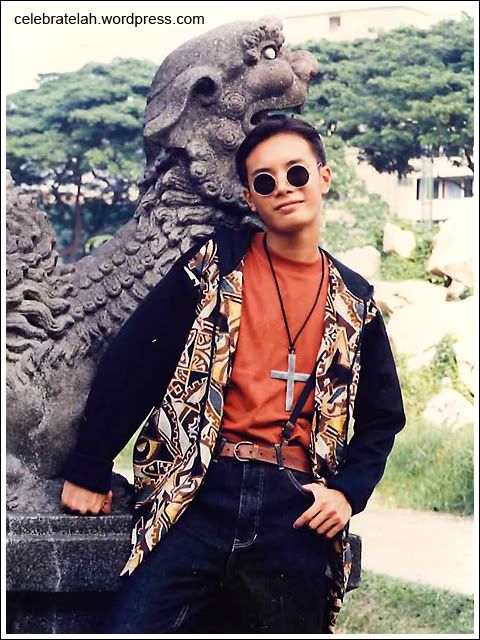
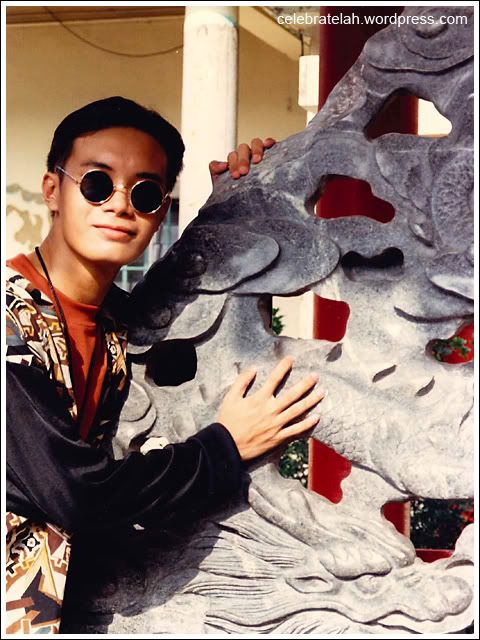
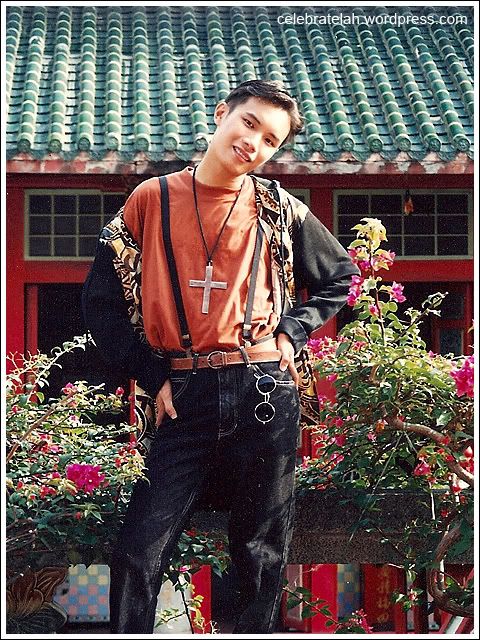
Photo circa 1991, age 17. Wearing a big cross to the temple… what was I thinking?!

The other thing I remember fondly of the temple is the gong. Everyday at 6am, the temple bell will chime and its solemn signal of a new day accompained my morning routine of getting ready for school.

To this day, whenever I hear the timbre of a Chinese monastic gong, I’m brought back to those teenage reveries. But how things have changed. The temple ground is beyond recognition to me now. These old pics, abett only partial snippets, showed how the temple looked like back in the early 90s.


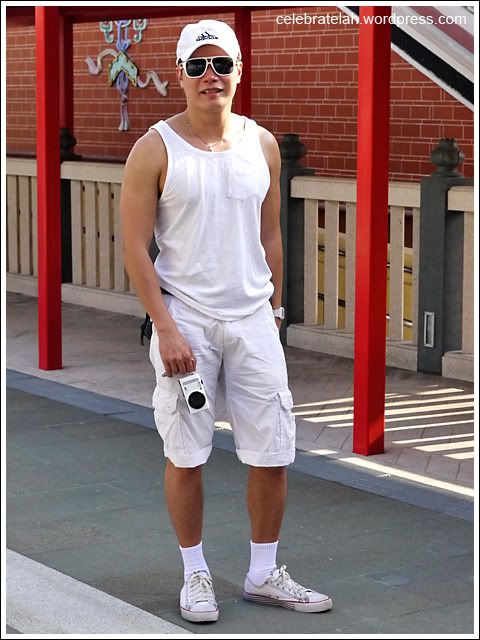
It is good that some things never changed… my displaced fashion sense. What I wore for today’s photography outing to the temple continues to be comic. I used to be very skinny and favoured long-sleeved garbs to hide the twigs I had for arms. That explains the hooded jacket I had on despite the tropical heat!
 

LOL at the hilarious Puyi sunglass that was all the rage back then.
 

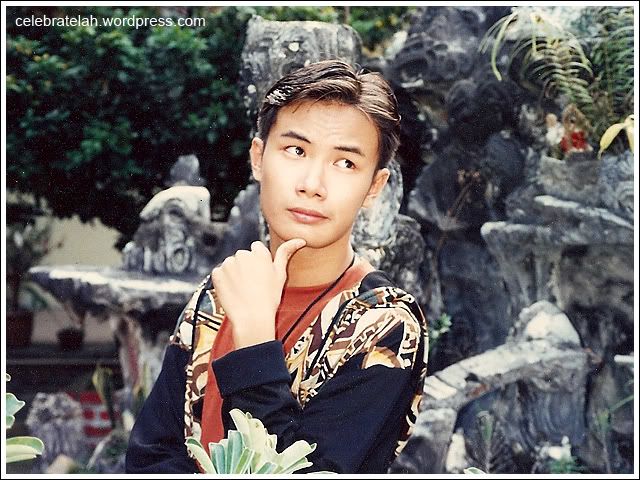
Wahahahaha… this pose is retro and revolting, it makes the hair on my arms stand!
 

Looking back at these old photos taken at Siong Lim Temple, I wanna dig my eyes out. Such a poser! And an obiang (awful) one at that. This series of photos were taken with my ex-secondary school classmates who initiated me into camwhoring.
 
Twenty-one years later, Siong Lim Temple has gone through a major restoration and comestic overhaul. While the improvements made it look very good with the manicured bonsai trees and stone pathways, it felt devoid of life.

There were many things I used to be able to do here but were amiss. I used to be able to take photos in the temple, but now, photography is prohibited in the monastery. I used to interact with the surroundings, today I just admired how neat and proper everything looks.


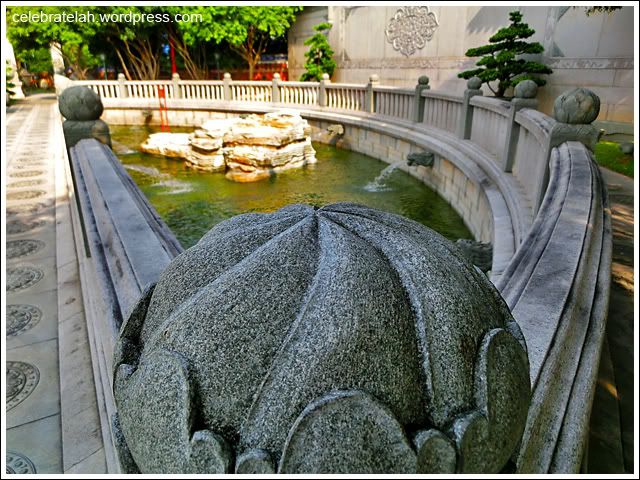
The organic pond I grew up with used to be just a huge hole dug into the ground and home to scores of tortoises, fish and small prawns. Now it is a much smaller fountain feature enlivened only by water spewing from dragon-headed spouts.
 
I wanted to cry “murder!” seeing how my growing up memories were defaced, but I guess it’s about moving with the times and getting reacquainted with an old friend who ordered every item on the plastic surgery menu.


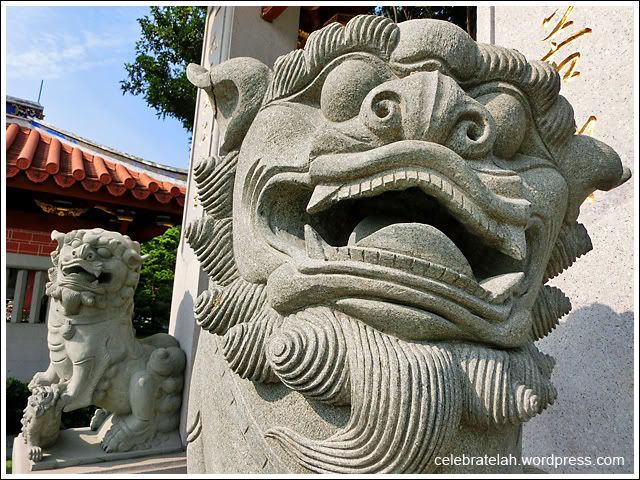
New, plumper stone lions replaced the old, skinnier ones. The yesteryear gate guardians were green in colour with a rotatable sphere in the clutches of the male lion. The new male has no movable ball. It is the belief that visitors can change their luck for the better by physically spinning the ball.
 

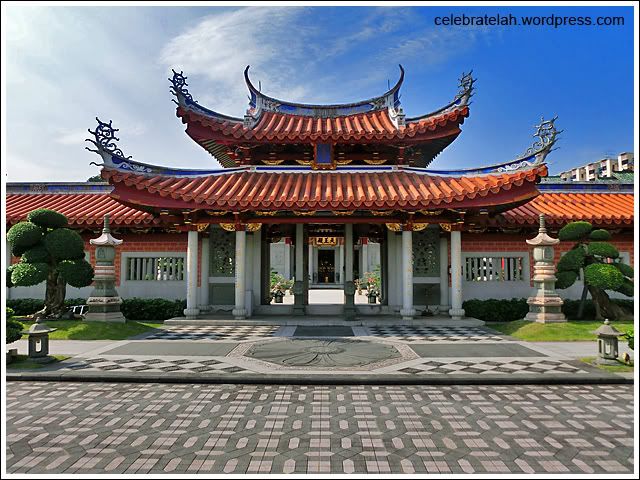
Holding in heaven. The entrance used to be just a brown dirt road with rough-hewned concrete slabs leading a path to the temple’s entrance. Now there’s this elaborate wall that creates a courtyard before the entrance.
 

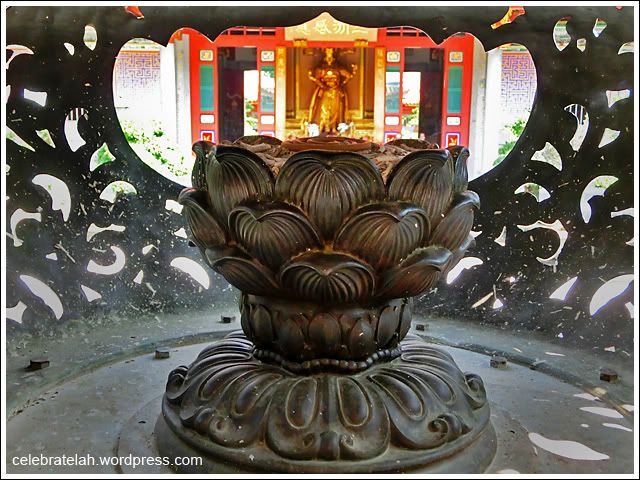
Bronze lotus-shaped incense holder within a huge censer in the central courtyard that separates the entrance prayer hall from the inner Buddhist sanctum.
 

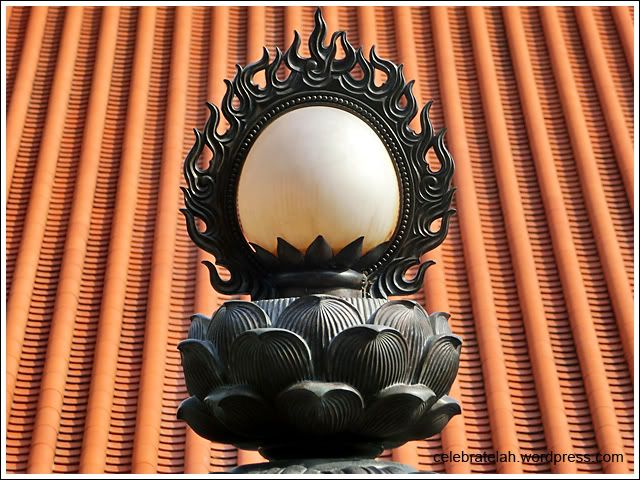
Burning pearl adornment atop the censer that symbolises the sun.
 

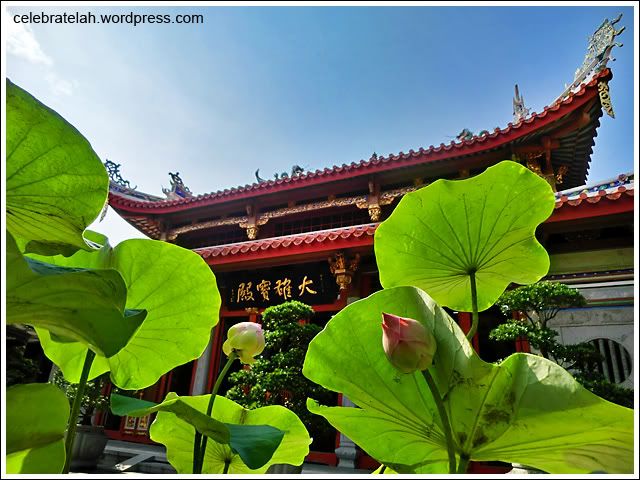
The grand Mahavira Hall of the inner sanctum framed with the inspiration that christened the monastory’s name.
 

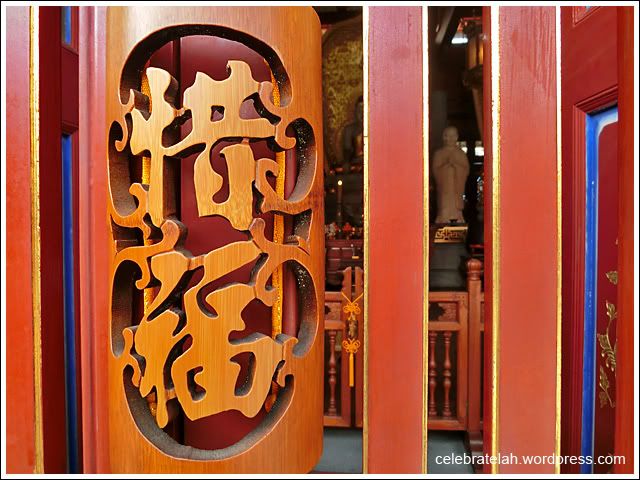
The bamboo-carved Chinese characters reads 惜福 (xi fu), which is a call for gratefulness of one’s blessings and to treasure them, but not be indulgent in the good fortunes. There were quite of few of these tablets hung at the door.
 

佛在心中莫浪求。When we have God in our hearts, whether it is Buddha, Jesus, Allah or Khrisna, happiness and contentment need no longer depend on external torrents of possessions, needs and desires. This shot is an attempt to reflect that message by using one of the bamboo tablets as a frame.
 

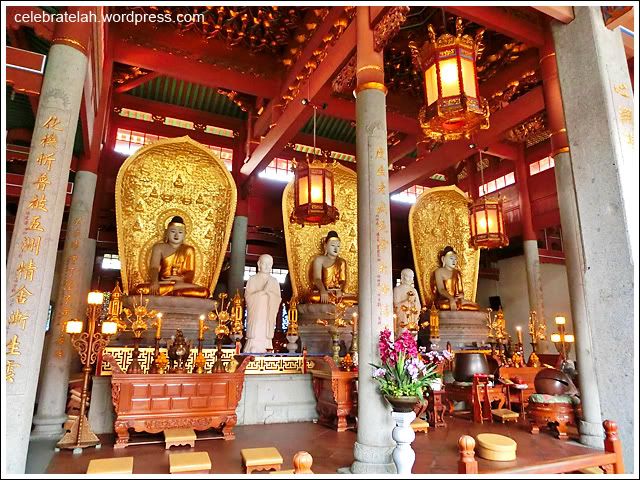
Interior of the Mahavira Hall. Photography strictly prohibited inside but it’s okay to take a shot at the doorway.
 

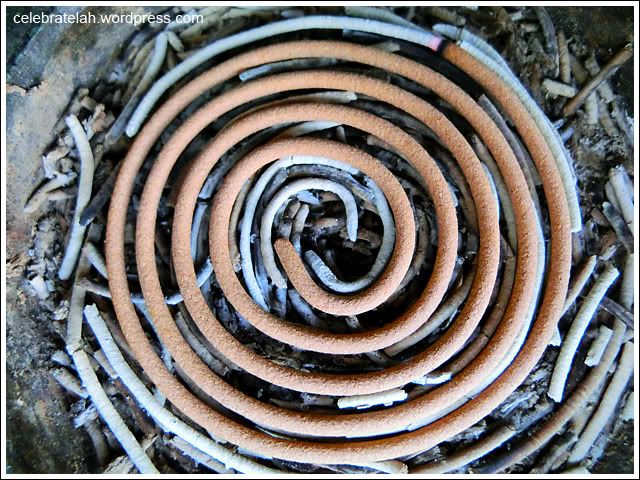
Buddhism believes that time is cyclical in nature where mortals are trapped in the eternal cycle of reincarnation until one attains enlightenment.
 

A glimpse of the original guardian lions through a makeshift workshop by the side of the temple. Built in 1902, Lian Shan Shuang Lin Monastery is the oldest Buddhist temple in Singapore and is gazetted a National Monument. The first phase of the temple’s restoration commenced in 1991 and completed in 2002.
 

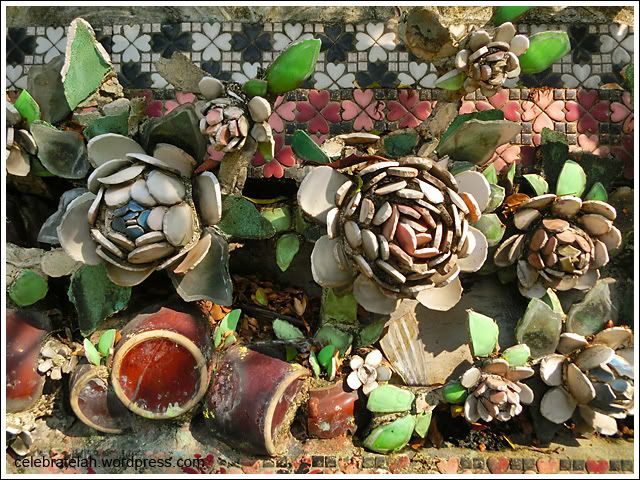
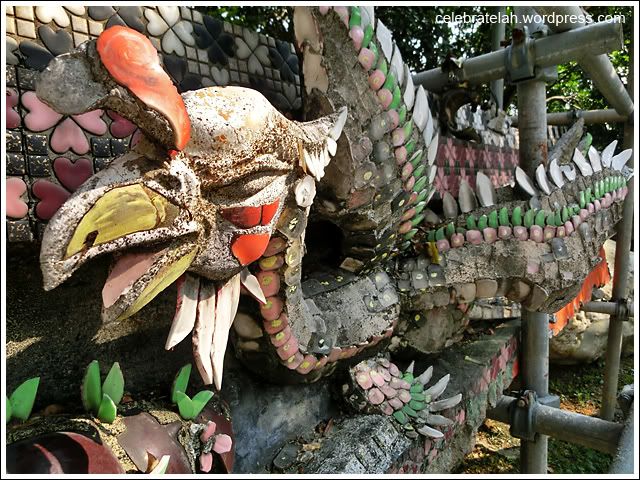
I was so excited at the unexpectedly rare opportunity to see part of the decorative 剪粘 (pronounced ‘Jian Nian’, meaning cut and paste) roof ridges at an intimate range. It was taken down for restorative work and I could study closely what I’ve seen from afar for many years. The artform is also called 剪花 (Jian Hua – cut flower) and sometimes 鱼皮像 (Yu Pi Xiang – fish scale sculpture).
 

Jian Nian sculptures frequently depict celestial beings and auspicious icons in Chinese legends and mythology and are used to decorate the roofs and eaves of buildings, usually temples. Originating from the Ming Dynasty Wanli period (circa 1600), great masters are not only skilled at the laborious production method where porcelain shards are painstakingly cut and pasted into moulds of sticky rice lime, but must be knowlegeable about fabled characters and their symbolism as well.
 

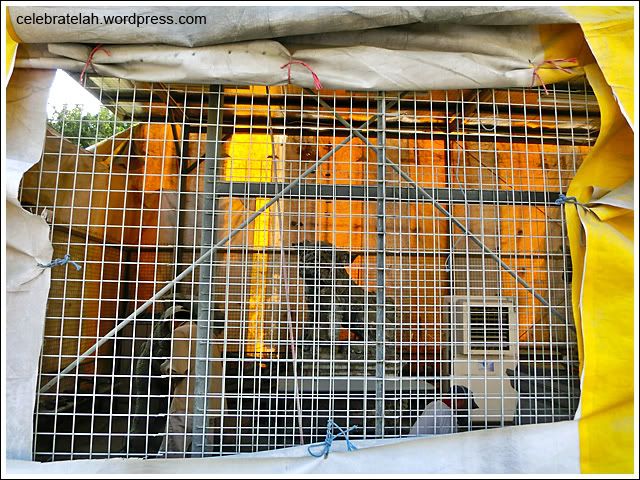
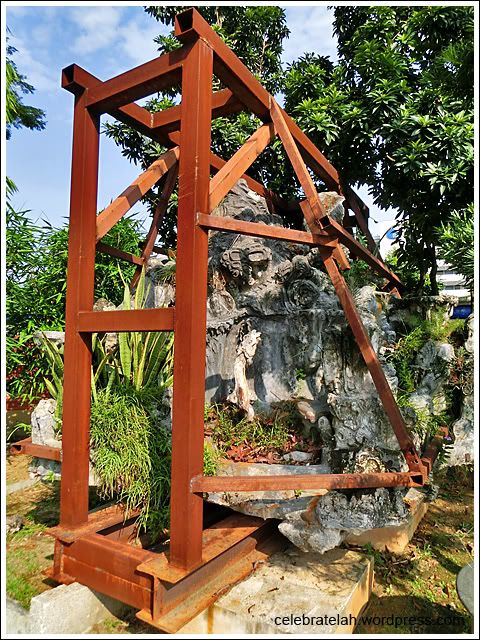
This boulder was the backdrop in the retro photo where I placed a thumb on my chin earlier in this post. It used to sit atop a well in the inner courtyard of Shuang Lin Monastery. Looks like it will be given a second life seeing that it has been ‘saved’ for restoration (I think).
 

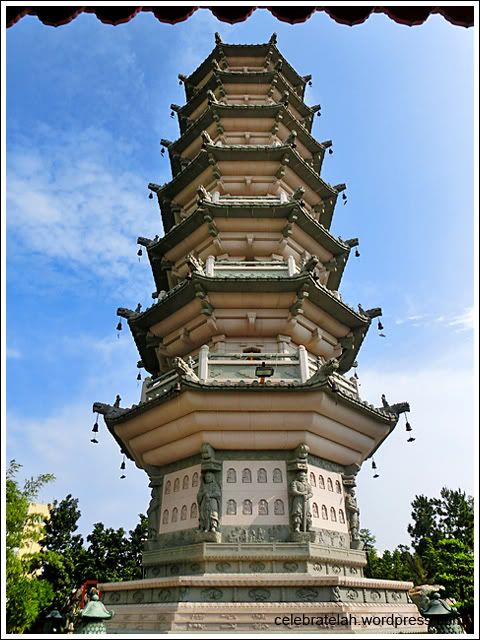
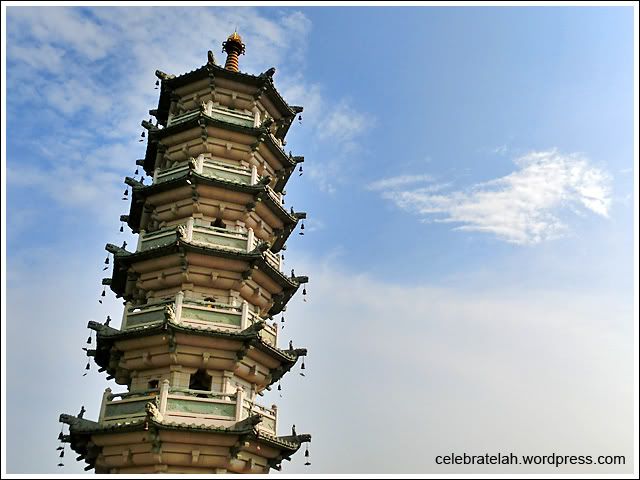
Dragon Light Pagoda. This is a relatively new addition to the temple site.


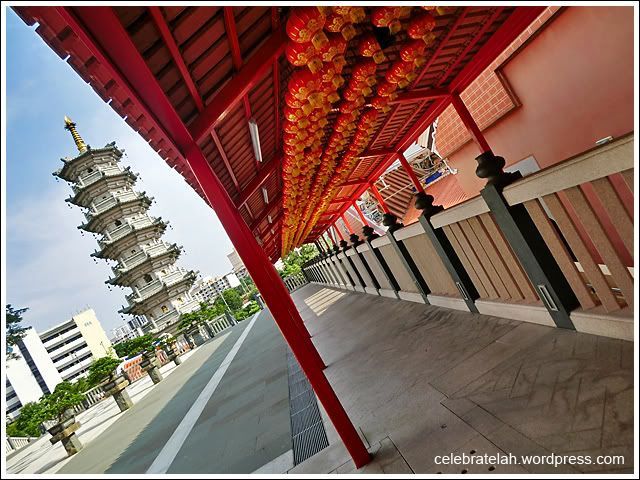
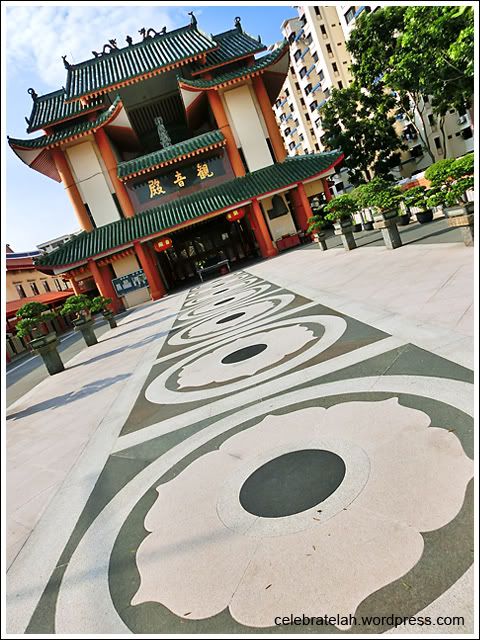
View of the pagoda from the Guan Yin Dian (Godess of Mercy Hall). The religious site is made up of three temples with Shuang Lin Monastery in the middle and flanked by Guan Yin Dian to the right and Cheng Huang Miao to the left. See map at the end of this post.
 

Age 38. I’ve also gone through some renovations over the last two decades from a brown stick insect to a white… hmm… dugong?
 

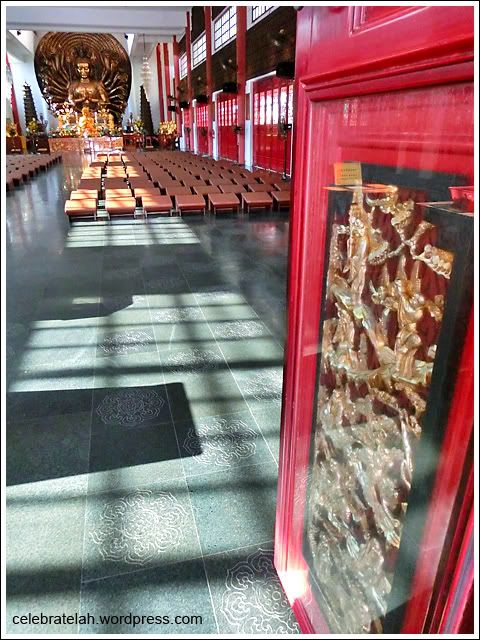
Lotus motifs leading to the entrance of Guan Yin Dian.
 

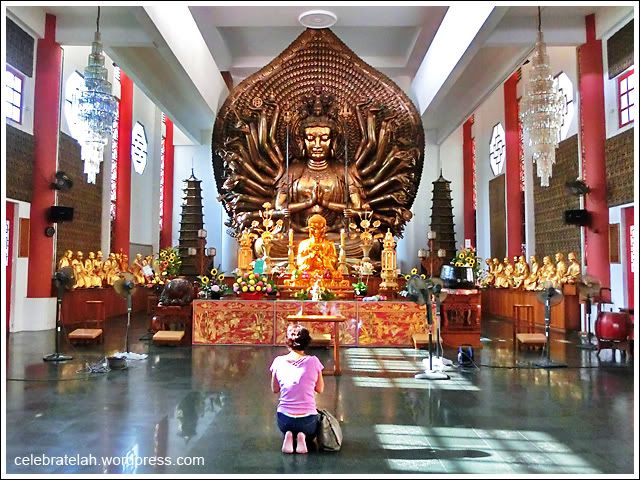
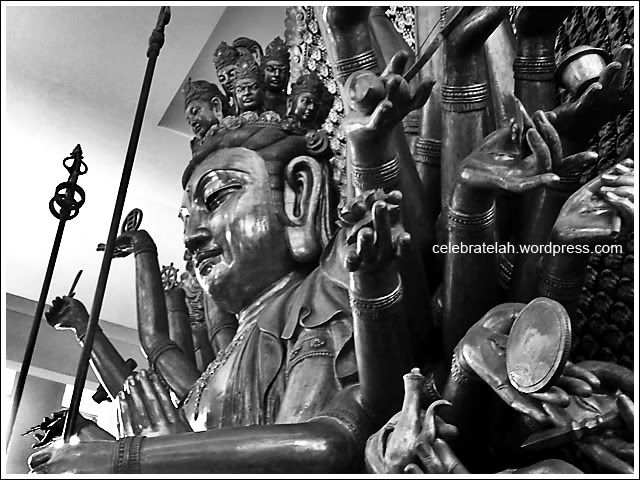
The centrepiece is a 11.2m bronze statue of the thousand-hands-and-eyes Guan Yin (Goddess of Mercy).
 

The Goddess of Mercy is the bodhisattva of compassion and her thousand hands and eyes manifestation represents her all-giving, all-seeing nature.
 

The deity’s actual name is 观世音 (Guan Shi Yin) – 观 (Guan) translates as observe / view / watch / see; 世 (Shi) meaning the world; 音 (Yin) being the word for sound or voice. So the goddess’ name means someone who monitors the world of its lamentations and offering help.
 

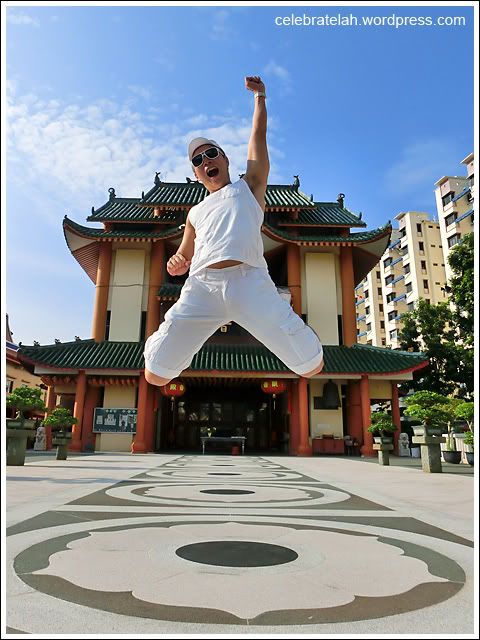
A leap back in time!

It felt rather surreal being here so many years apart. It’s a pity I arrive only about an hour before closing time and didn’t get to explore more familiar grounds. Besides, the last section of Shuang Lin Monastery was hoarded up for renovations.

Nonetheless, there was still enough points of interest to explore for a late-afternoon photo outing. Do check out this old, well, now it’s new playground of mine…

Getting Here : From Toa Payoh MRT and Bus Interchange, take feeder bus nos. 232, 237, or 238 (less than 10 minutes journey)

Address : 184E Jalan Toa Payoh, Singapore 319941

Tel : +65 6259 6924

Opening Hours : 8:30am – 5:00pm daily (Free admission)


Click map to enlarge.
Related Posts Plugin for WordPress, Blogger...