16 April 2016

Johor Bahru - Arulmigu Sri Rajakaliamman Glass Temple

Date of Exploration : 24 Mar 2015

Stowed away at the end of a nondescript plain lane next to Johor Bahru's Tebrau Highway, Arulmigu Sri Rajakaliamman Temple is what I would call a 'genie in a bottle'... where a big personality is trapped inside a small existence.

My curiousity to check this place out was seduced by the temple's claim to be "the first glass temple in the world", but other than the temple being covered in tiny pieces of mosaic mirrors reminiscent of some of the sparkling wats (Buddhist temples) in Thailand, what fascinated me more were the statues that I found inside.

Getting to Arulmigu Sri Rajakaliamman Temple

Not to be confused with Arulmigu Rajamariamman Devasthanam Temple, which is a major Hindu temple in JB a stone's throw away from City Square Mall, Arulmigu Sri Rajakaliamman Temple is a much smaller and lesser populated monument of faith. It is also not too far from City Square Mall.

While it is possible to walk from Arulmigu Sri Rajakaliamman Temple from City Square Mall by walking along Jalan Tun Abdul Razak (which is an arterial main road fronting one side of the mall) it is easier to just take a cab there which will cost under RM10 from the JB immigration checkpoint. The journey takes under 10 minutes without a traffic jam so it is pretty accessible.

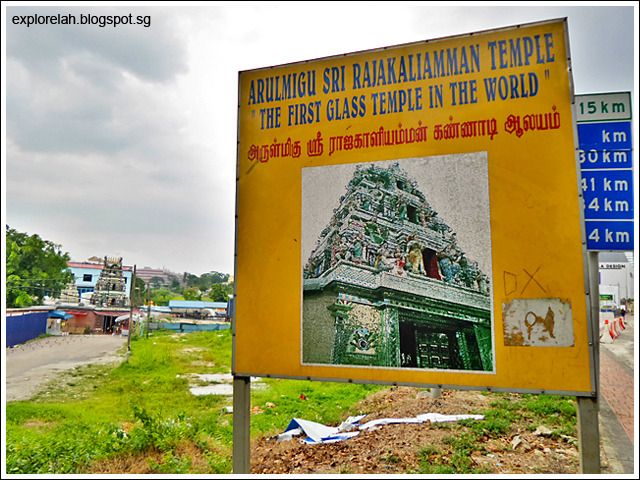
Signboard next to Tebra Highway that advertises the site of Arulmigu Sri Rajakaliamman Temple. My suggestion is to print out photos of the temple and show it to cab drivers as they may think that you are going to the more prominent Arulmigu Rajamariamman Devasthanam Temple instead of this one.
Mirrors, Mirrors on the Temple...

... who's the shiniest of them all? Personally, when I first arrived at Arulmigu Sri Rajakaliamman Temple, I was like "We're here already?" I was expecting something more bewildering than the petite, can't tell it's made of glass temple before me.

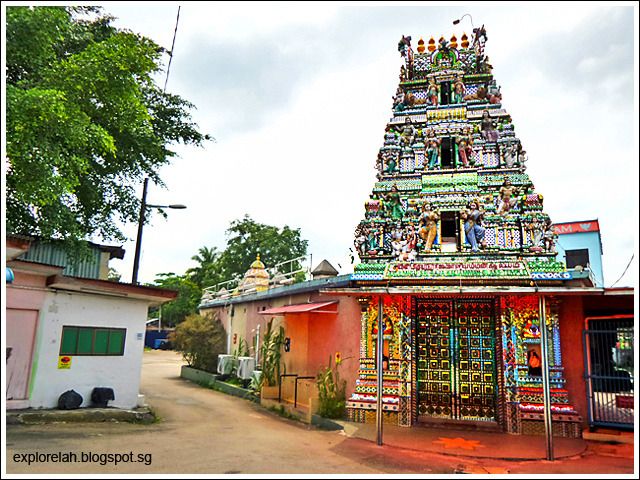
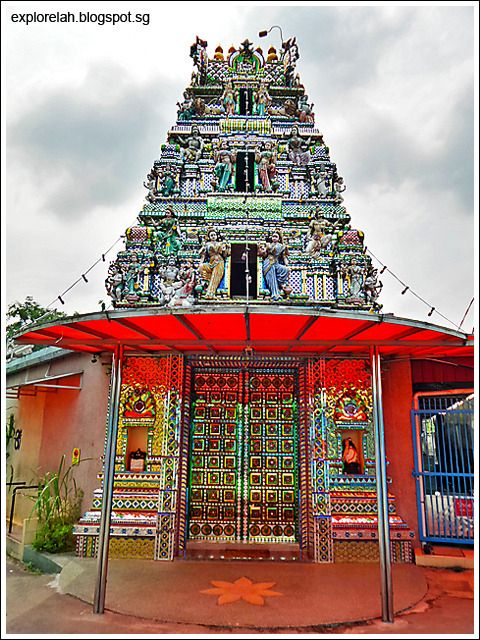
Facade of Arulmigu Sri Rajakaliamman Temple, the first glass temple in the world.
Compared to the Thai wats with massive chedis adorned with coloured, mirrored glass pieces I'd come across in Bangkok, this seemed rather 'little gas' (小气) and not world's-first-something kind of wow. The temple's brag unlocked my jaw. But unfortunately, it didn't drop.

But on closer examination, it does present a marked differentiation from conventional Hindu temples that are coloured solely by paint or terracotta and not a mix of paint and hued mirror tiles.

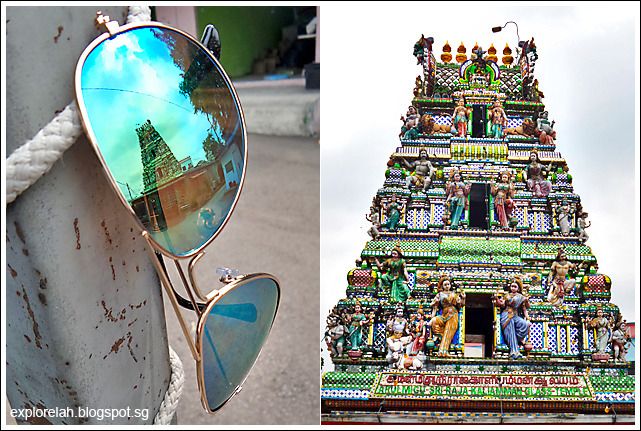
Containing the colourful gopura of the temple within an eyeful of my sunglasses.

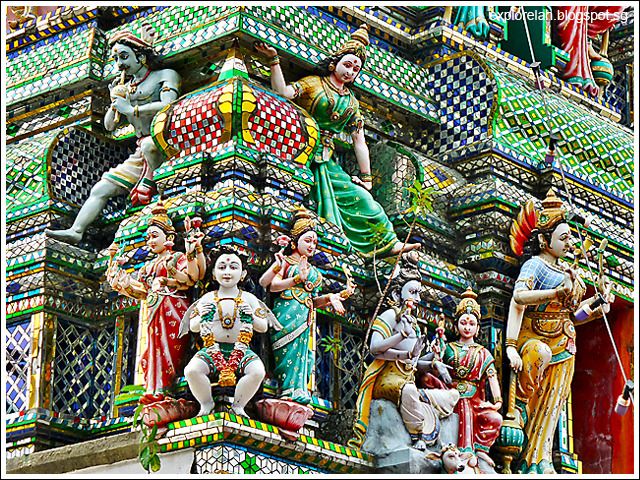
The structural form of the gopura is covered in a mosaic of mirrored tiles but the Hindu deities and statues are painted.

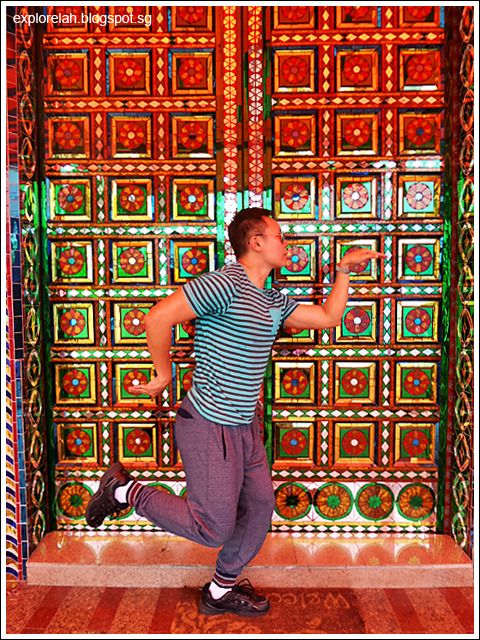
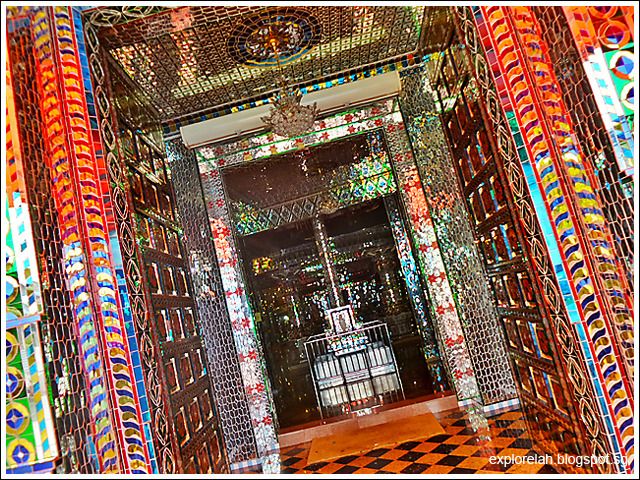
We arrived at 2:24pm on a Tuesday because according to online sources, this is when the temple is open to foreign visitors. But we faced this door, although beautiful, it wasn't open! We hung around the closed doors and chased down the occasional humans walking around the temple and realised that it's closed for a special prayer session. But if we waited till 3pm, which is half an hour later, the doors will open.

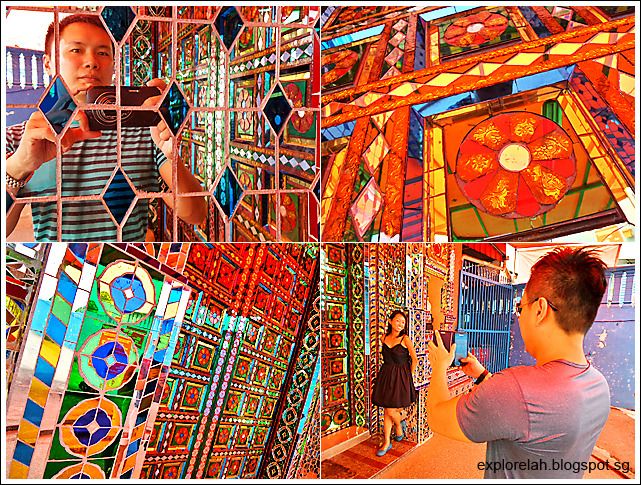
So we spent the minutes clicking away at the colourful mirrored doors of the temple. On hindsight, it is lucky that we encountered the temple when the doors are closed so we can truly appreciate geometry of the mirrored decorations.

30 minutes later and the doors are still shut. So I went round to the back of the temple and waited to sight anybody to inquire if temple wasn't receiving visitors that day or we should wait some more. I was told the temple will open shortly. So we waited...

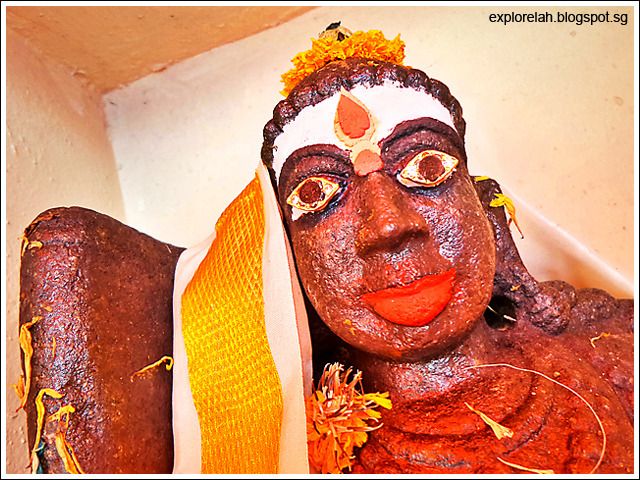
A rudimentary stone statue of Shiva guarding the entrance to Arulmigu Sri Rajakaliamman Temple. It is an inheritance from the temple's early beginning as a shrine in 1922.

Finally, after almost an hour's wait (we arrived at 2:24pm), the doors were open at 3:20pm! According to online sources that have links to the temple, foreigners' visitation hours are between 1pm - 5pm that's why we came after 2pm. The temple is marketed as a tourist attraction in JB so visits are welcomed with a RM10 entrance fee.

Perhaps the day we visited was a special prayer day so the temple wasn't opened as scheduled or it just doesn't adhere to stipulated tourism hours I'm not sure. But if you encounter closed doors within the stipulated visitation hours, try to spot the temple staff and ask.
A Reflection of Acceptance

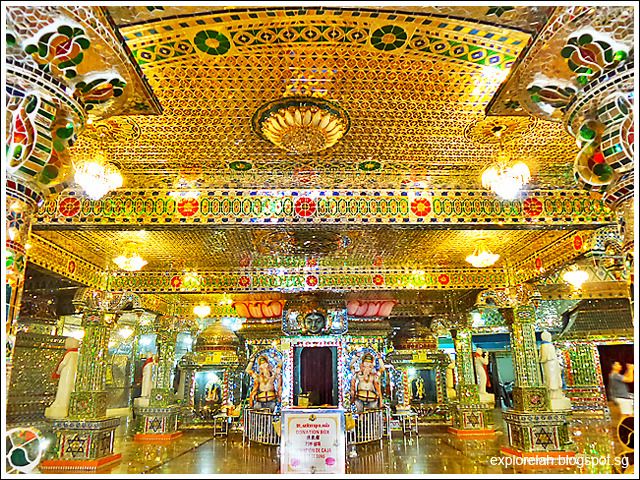
Since we were the only 3 visitors to the temple, the staff didn't bothered to on the interior lights and it was rather dull. So we requested for the lights to be switched on and when they were, the magical colours of the place sprang to life. You can see the above photo for when the lights were off and the photo below for when the chandeliers were turned on.

Politely request for the lights inside the temple to be turned on if they are off as the lighting makes a huge difference to bring out the beauty of the mirrored ceiling and columns.

Not to be a bitch, but Arulmigu Sri Rajakaliamman Glass Temple does charge a RM10 entrance fee for tourists so rightfully, it should keep its side of the deal and help make the visit experience fuller. But do ask nicely as there may be religious services going on or there may unknown reasons the temple is keeping the lights off.

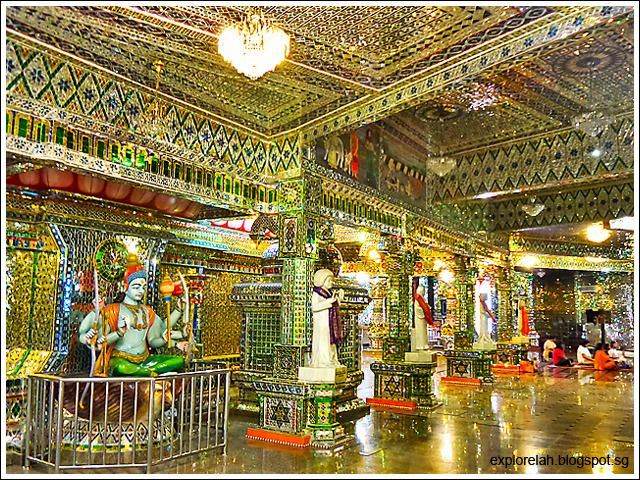
It's like walking into disco ball nation with all the reflective mirrored tiles. The inspiration behind Arulmigu Sri Rajakaliamman Glass Temple's glistening choice of decorative material were the Thai temples of Bangkok.

When Guru Bhagawan Sittar, the temple's chairman and chief priest visited Bangkok, his attention was captured by the sparkling roofs of Thai temples that have reflective glass in a distance. Inspired, the guru applied the mirror glass approach in dressing up
Arulmigu Sri Rajakaliamman Glass Temple as he expanded what used to be a shrine into the full-fledged temple it is today.
But what captured my attention in the temple were the line-up of holy figures from other religions.
Though a Hindu temple, you can find tributes to other religions in the form of statues of representative religious figures, where permissible (Islam teachings forbids the visual depiction of the prophet Muhammad), included within Arulmigu Sri Rajakaliamman Glass Temple's prayer hall.

Amita-llujah-maste

Would I be persecuted for mish-mashing the greetings and proclamations of Buddhism, Christianity and Hinduism? To me, I view the choice of faith, if there is a choice, as choosing a belief of the after-life. Whether it is the belief of an endless cycle of samsara (reincarnation) till the soul attains nirvana or a definite eternal resting place for the soul in heaven or hell, faith, deals with what happens after life ends because in this life, our experiences and what humanity goes through are all the same. 

For that matter, in my simplistic view, all religions share a common foundation in laying down a code of conduct or morality for humanity to aspire towards self-betterment through love, compassion, kindness, empathy and peace with all that is around us. So a choice to follow a system of belief, or the choice of not having one, shouldn't be a contest for supremacy but an acceptance that the vastness of life contains a myriad formulations to equate good and decipher death. Just like food for you and me to sustain life is not food for all animals, insects, plants or microbes... and vice-versa. So, you know, like the saying goes, let's not make this life a living hell for others.

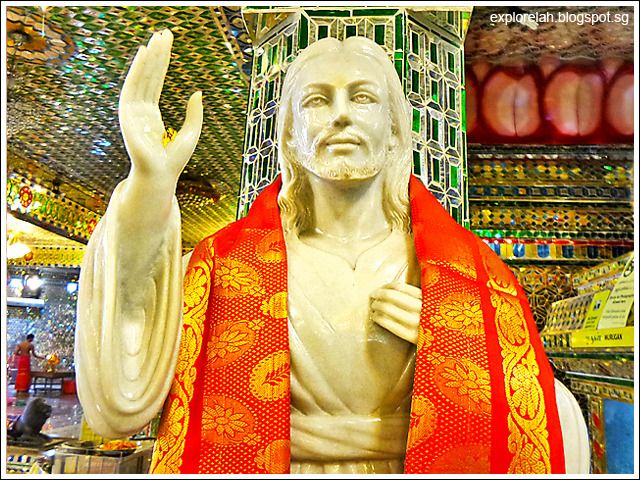
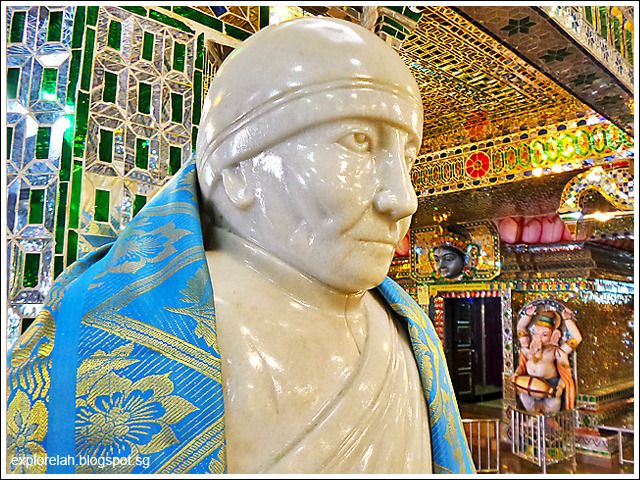
A statue of Buddha, Jesus Christ and a religious holy man lined the pillars encircling the holy shrine flanked by Ganesha, the Hindu elephant god.

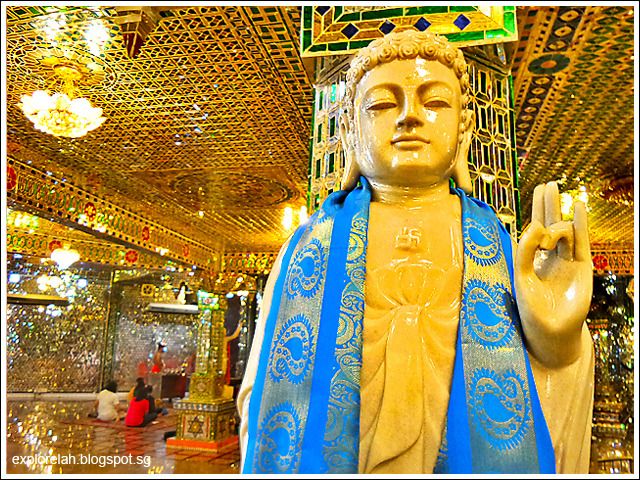
Amitabha... the enlightened figure of Mahayana Buddhism in a surya mudra (ring finger to thumb) pose. The fingering conveys a blessing of vitality and energy.

Hallelujah! I am Christian and if I were the old me, I would think that a statue of Jesus Christ amongst the statues of Hindu gods amounts to blasphemy because in the tradition of Abrahamic religions, there is only one true god and not a plethora of gods. But the new me accepts the different faiths, learn from them and expand my the human element in me.


Mother Teresa... a recognition of the Roman Catholics' belief system in the Hindu Arulmigu Sri Rajakaliamman Glass Temple.

Namaste. Here's a statue of Sathya Sai Baba, an oft controversial religious figure whose doctrines usher in a new age of interfaith beliefs and traditions.

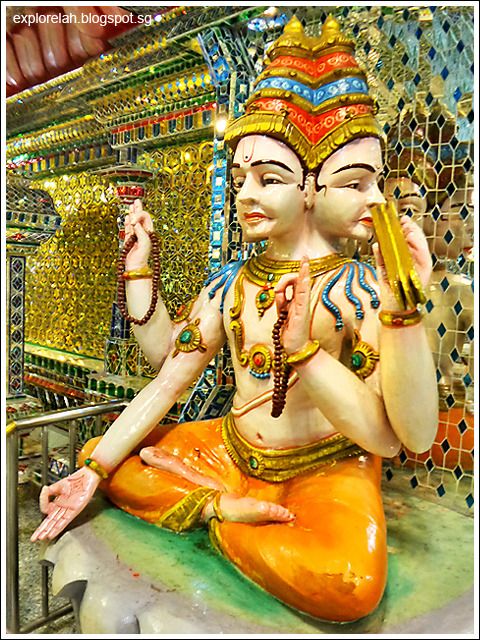
Brahma... the four-faced god of creation in the Mahabharata concept of Hinduism. He is a third of the trinity of supreme gods which consists of the said deity, Shiva (the destroyer) and Vishnu (the preserver). In Hinduism, destruction is a part of creation. Evil, is as necessary as good.

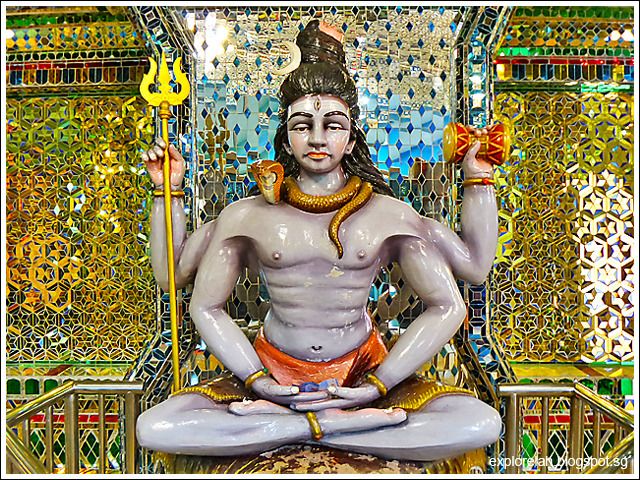
Statue of Shiva with a cobra around his neck. The cobra represents all the bad things (evil, demons, etc) and this statue is a devotional consolation that good will always triumph over evil.


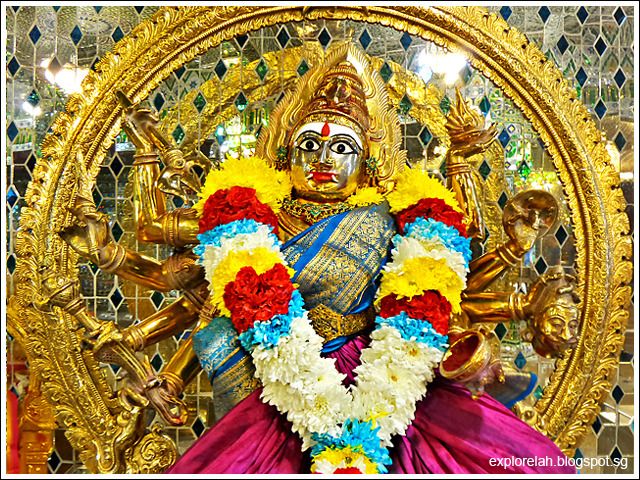
A golden statue of Kali, the goddess of time and change, and a feminine manifestation of Shiva is also honoured in Arulmigu Sri Rajakaliamman Glass Temple. Shiva is the god of destruction, so is Kali, the fearsome goddess that signifies death and the vanquish of evil.

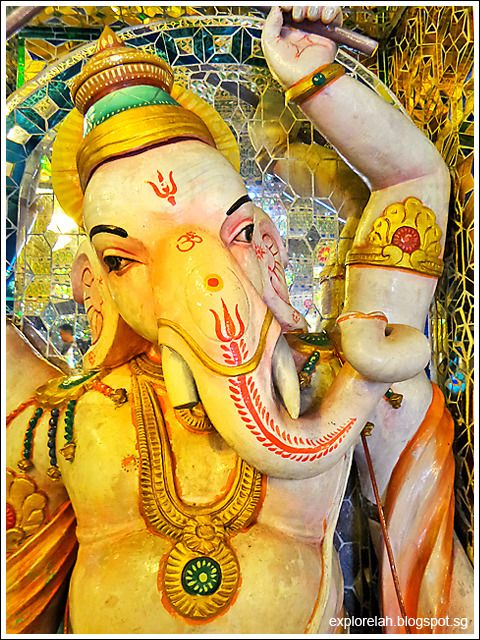
Here is Ganesha (remover of obstacles), one of the most beloved and prominent deities in Hinduism. Ganesha is the son of Shiva and Parvati and embodies the spirit of 'rising above the odds', god of success, wealth, knowledge, and all things good in mammoth proportions.


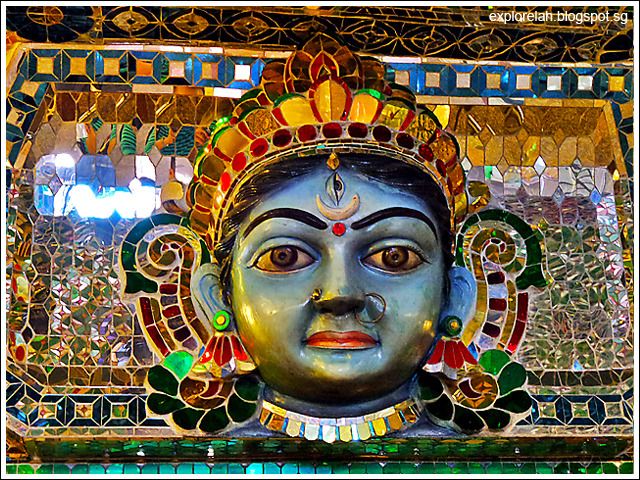
A head relief of the goddess Kali eyes every visitor that comes into the central ritual shrine of Arulmigu Sri Rajakaliamman Glass Temple.

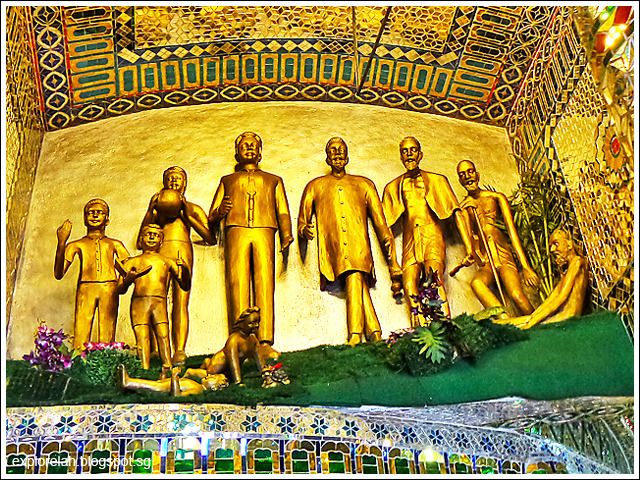
From cradle to grave, this 3D dioramic depiction of a man's life urges all to see life in perspective... that it is transient. Spring heightens into summer, fades into autumn and passes into winter. So don't take things too hard or hold on to anything for everything shall pass with the different stages of life and ending ultimately in death.

I'm not familiar with Hindu rituals, perhaps you can enlighten me, but we came across a prayer session where only women attended.

It was enlightening to visit Arulmigu Sri Rajakaliamman Glass Temple for its open acceptance of different religions. The temple challenged the confines of my mind about faith and I'm glad I left a bigger person.

Or so I would like to think :)

14 February 2016

Kuala Lumpur - Chin Woo Stadium : A Forgotten Trophy in Malaysia's Sporting History

Date of Exploration : 30 Dec 2015

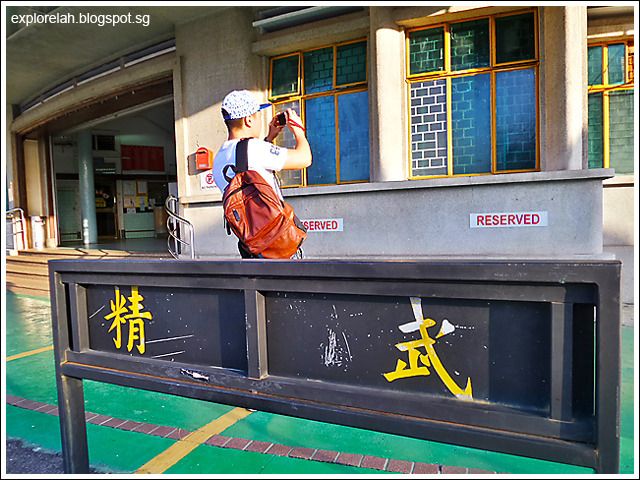
While scouring for unusual old-world sights to explore in Kuala Lumpur, I stumbled across something 'new'... Chin Woo Stadium (精武体育馆). So here I am, compact camera in hand, all eager to bring home images of this architectural memoir authored by a time period I never knew.

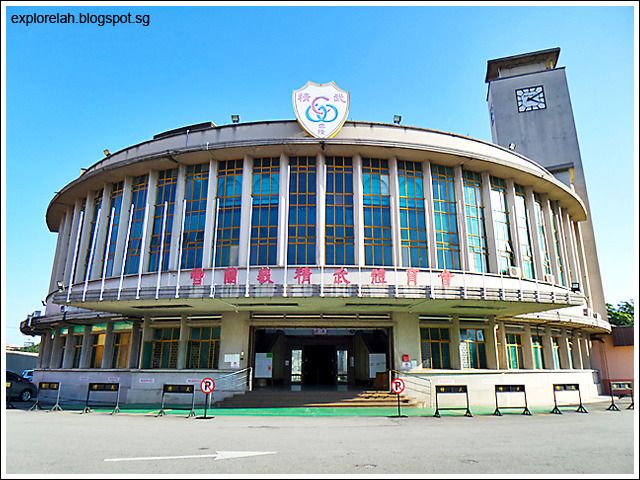
Construction of Chin Woo Stadium started on 31 August 1951. It was officially opened on 11 December 1953 and remains till this day, in untouched mint condition
More of a sports hall than stadium, what makes Chin Woo Stadium a rare historical gem is that most sports facilities that are passed their shelf-life get torn down with a new one built as replacement or redeveloped since stadiums take up quite a lot space and are hard to re-purpose (unlike old shophouses which can get a second life as modern cafes, hotels, retail shops, offices and homes).

I've seen a lot of nostalgic old shophouses, magnificent inherited monuments and historical religious constructs around Malaysia, most with a refreshed coat of paint to entice tourists, but this is the first time I'm walking into an old sports hall, and one that is not afraid to show its age.

Getting to Chin Woo Stadium

Perched on a low hill not too far from KL's famous Chinatown district (Petaling Street), the stadium is pretty accessible. You can get here either by dropping off at either one of the two LRT stations that serve the area (Maharajaleela LRT Station and Pasar Seni LRT Station) and walk, it is quite a distance to walk, or take a cab.

We chose the cab option which cost us about RM10 on the meter from the Jalan Bukit Bintang area (KL's most popular shopping street) on a smooth traffic day.

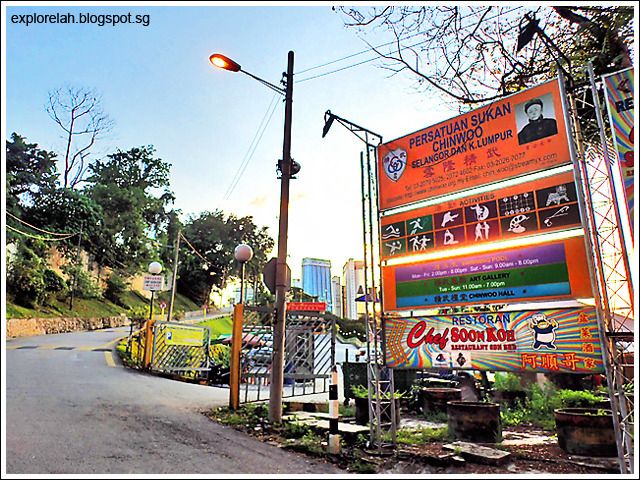
This photo shows the uphill side street off Jalan Hang Jebat that leads to Chin Woo Stadium. Look out for the signboard at the mouth of the side street that advertises the stadium's presence. It is about a 200m walk from the bottom to the top of the hill.
Get Your Kungfu On

If, like me, you grew up with Hong Kong kungfu movies that immortalised the heroism of Chinese folk wushu (martial arts) masters such as Wong Fei Hung (黄飞鸿), Fong Sai Yuk (方世玉), and Yip Kai Man (now popularised as Ip Man 叶问 by Donnie Yen), then you will be no stranger to the name Huo Yuan Jia (霍元甲).

An expert marital artist famed for taking on and defeating foreign fighters who dared challenged Chinese wushu, Huo Yuan Jia was an inspirational figure in China. He co-founded the Chin Woo Athletic Association in Shanghai in 1909, which later established charters in over 20 countries worldwide with no less than 59 branches. There is a Singapore Chin Woo Athletic Association too located at No. 90, Neil Road!

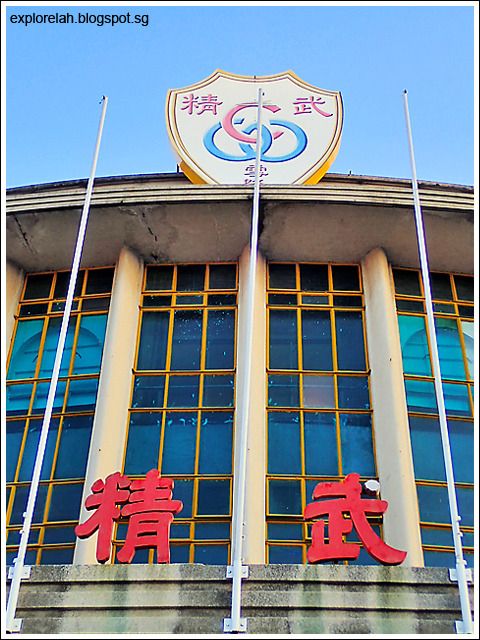
Chin Woo (精武 jing wu) means "essence of marital arts" or "highly skilled in martial arts".

When I first laid eyes on the circular facade of Chin Woo Stadium, time went on a spontaneous rewind. Nothing seemed to have changed since the 50s. There were no refurbishment attempts to modernise its exterior, no visibly new architectural extensions that try so hard to blend into the retro aura, or even a fresh coat of paint.

The amazing thing to me is that the stadium is still a fully functional sporting outlet that is still in use today!

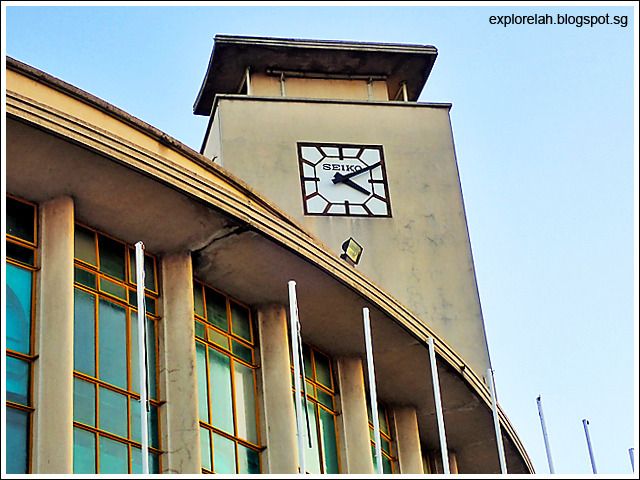
Time really comes to a standstill here. Don't believe me? Take note of the Seiko clock tower at Chin Woo Stadium and see if the hour and minute hands moved from the time you arrive to the moment you leave. The clock is frozen in time.

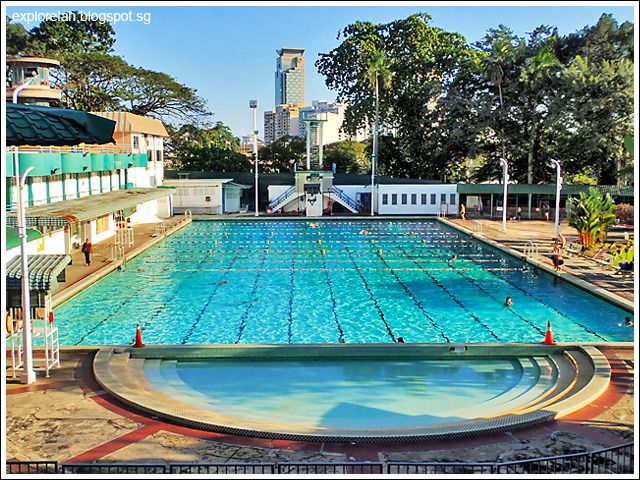
Kuala Lumpur's Chin Woo stadium is one of the earliest sporting facility in Malaysia and the first to own an Olympic-sized swimming pool in the country. Bring along your swimming gear if you would like to take a dip. The pool opens from 2 - 8pm with an entry fee of RM2.00 per adult.

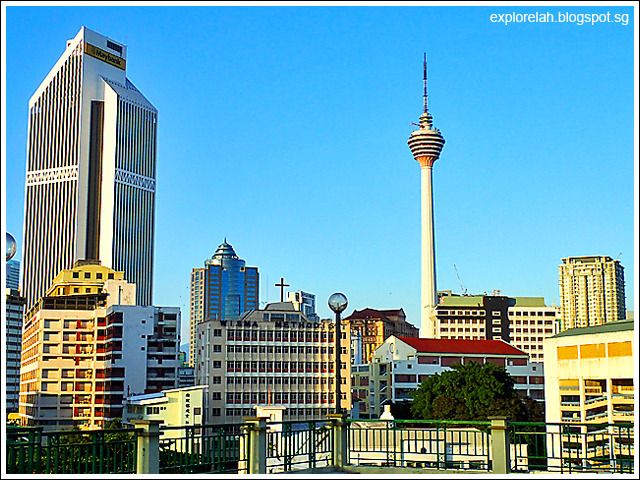
View of Kuala Lumpur's city skyline with the KL tower from the carpark of Chin Woo Stadium.
Strike a Pose

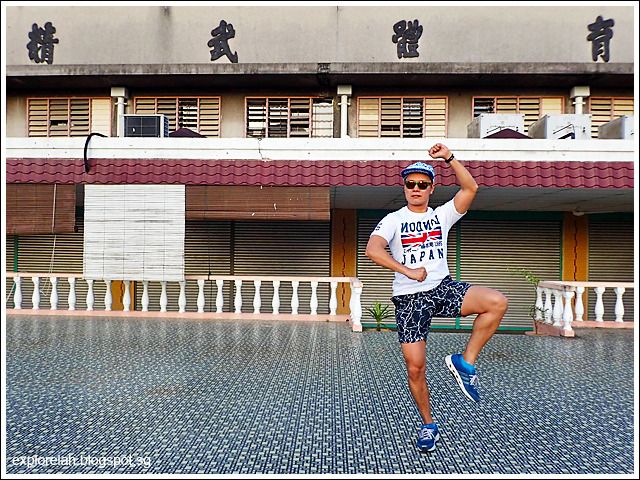
Because of its unpretentious ode to a forgotten period in history, Chin Woo Stadium makes for a great location for cam-whoring. There is really nothing much else to see or do here except take photos of the historic building and you in it.

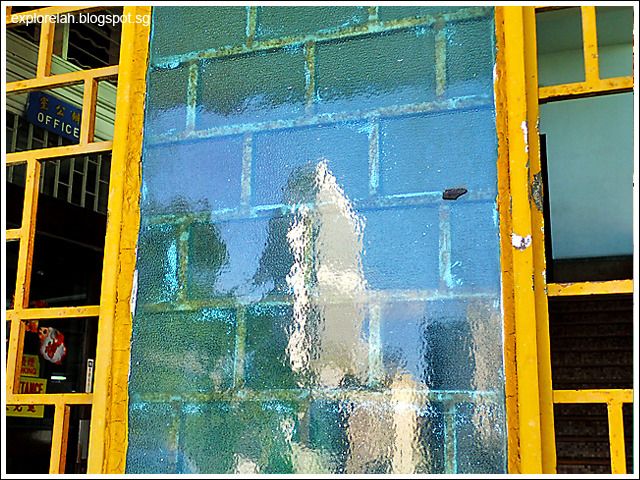
A reflection of KL's youthful skyscrapers on the wrinkled glass of Chin Woo Stadium.

The best time to visit is around sunset when the retiring sunshine strikes its golden rays on the face of Chin Woo Stadium. We arrived at about 5:45pm and the lighting angle was perfect.

"This is not a tourist attraction place," chided a staff at the stadium. Indeed, Chin Woo Stadium still serves as a sports club for paying members so do be respectful when visiting. We were only allowed to explore the ground level with the upper levels being out-of-bounds for non-members.

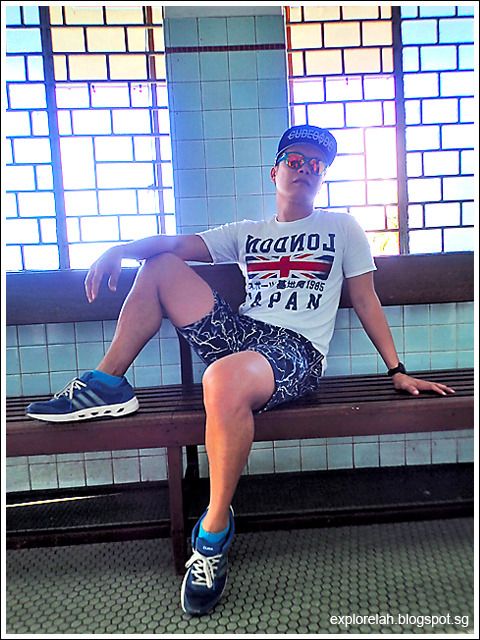
It's Kuala Lumpur. My t-shirt getting it all wrong about where I am... and I'm trying very hard to summon Justin Bieber in my 41-year-old body lah!

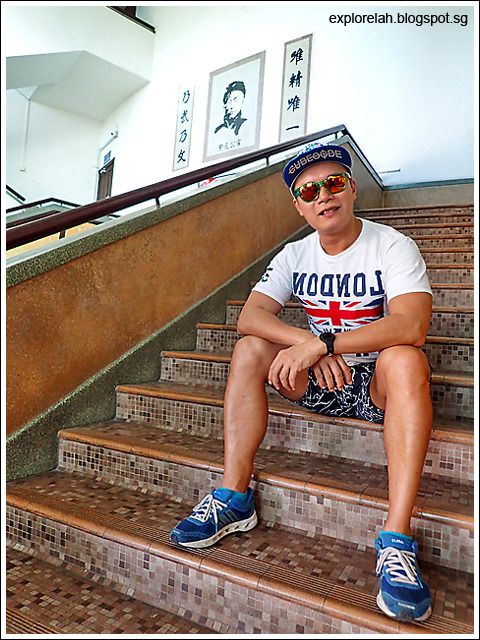
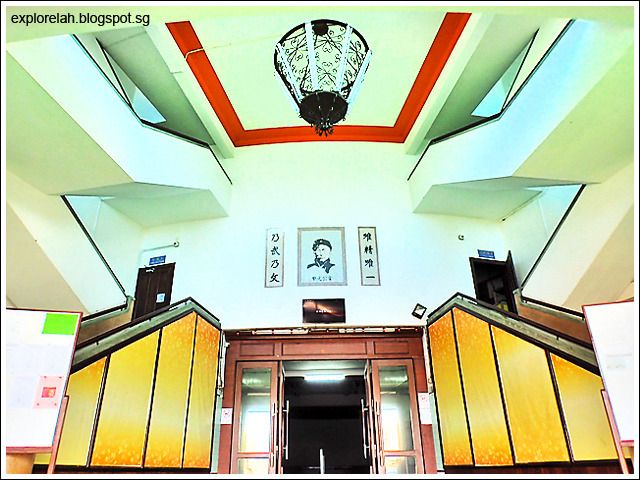
The portrait behind me is that of Huo Yuan Jia (霍元甲), the co-founder of the Chin Woo Athletic Association.

First level foyer of Chin Woo Stadium.

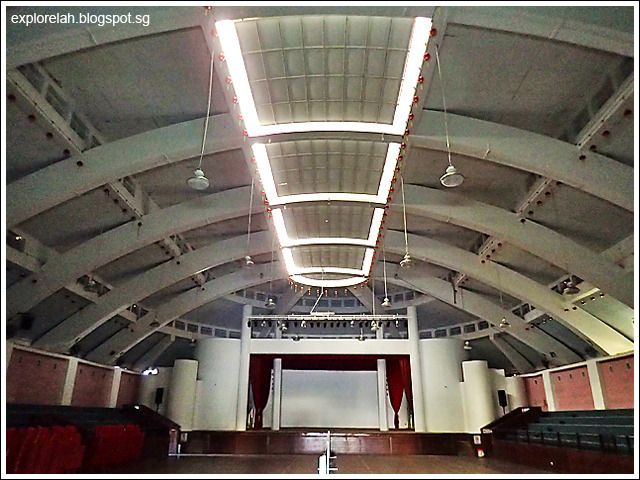
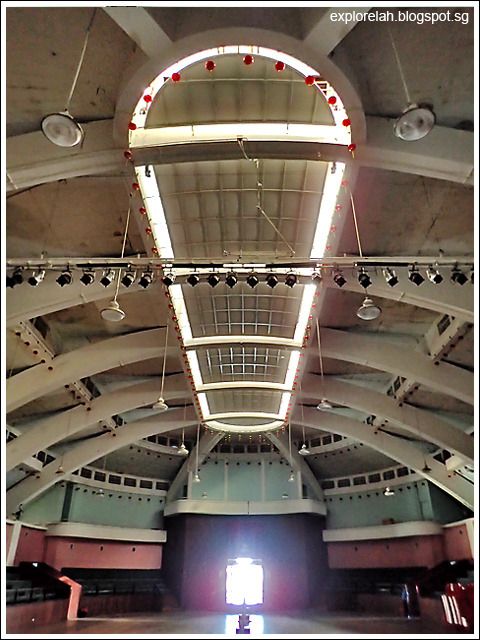
Interior of Chin Woo Stadium.

A rim at the ceiling lets in natural light. A simple yet brilliant design to save electricity.

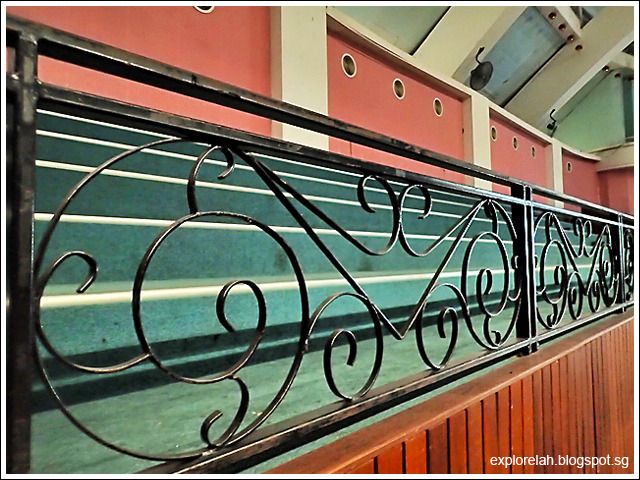
Getting a dose of retroliciousness with the wrought iron decor that's all the rage in the 80s.

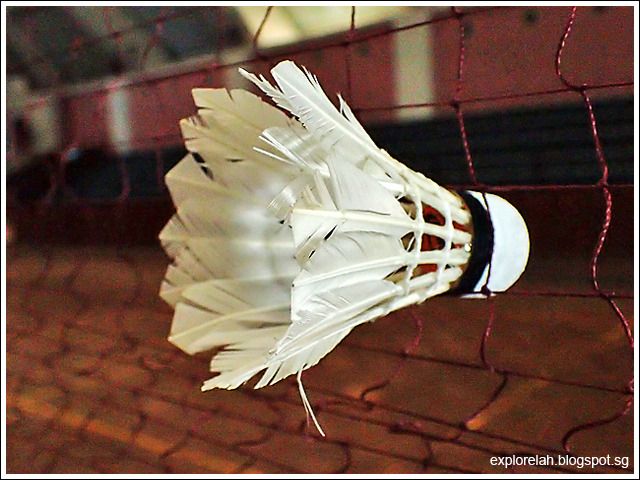
The 'stadium' is actually more of a multi-purpose / badminton hall with an adjoining swimming pool.

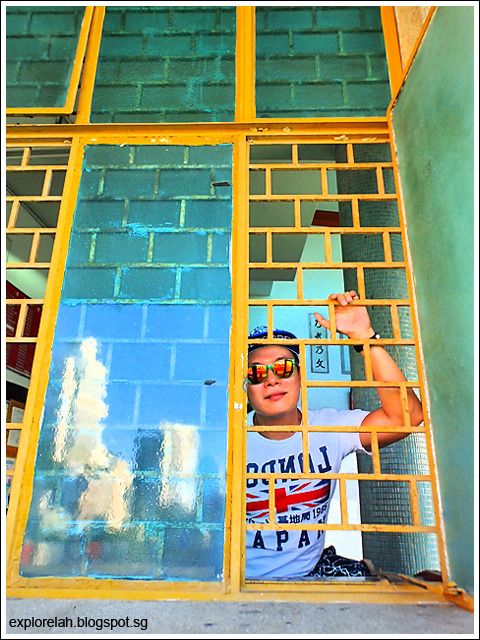
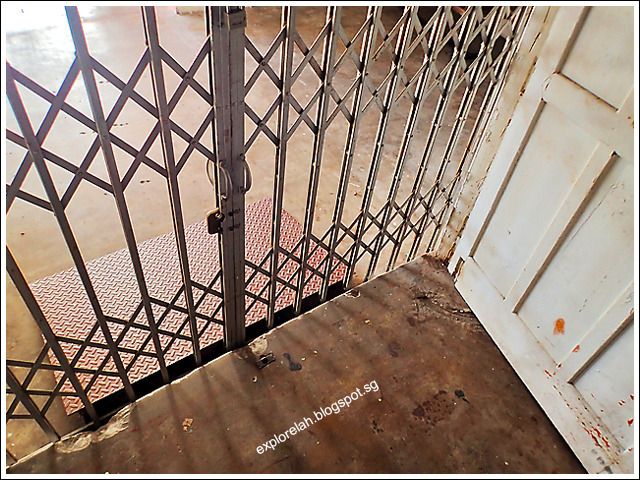
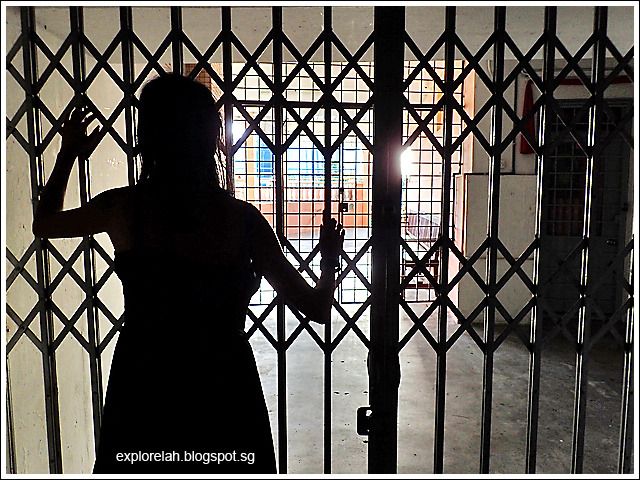
Getting into a corner with the yesteryear folding gate grille design that I grew up with at my maternal grandfather's shophouse along what used to be known as Gor Beh Lor (Fifth Road) in Singapore's Bencoolen district.

Sometimes we lock ourselves up in the past. Because it is something we know. What we know is safe. Or is it?

On the open air second level porch of Chin Woo Stadium where the toilet is. Our cam-whoring here was short-lived as the security guard promptly chased us away. So here I am trying to be I -Don't-Know-What before being escorted away by security.

Chin Woo Stadium is touted as an ideal spot to watch a sunset over KL but the month we came (December), the sun went down behind a building and it was a no-show.

Nevertheless, it was a one-of-a-kind mini adventure that brought on a big experience of stepping back into a bygone era that's authentic, unpretentious, and bell-bottom classic!

09 December 2015

Koh Samed - A Sunrise Worth Waking Up For

Date of Exploration : 14 Nov 2015

I love watching sunrises. Because it always feels like the universe is giving us a beautiful gift to start the day. And one of the best places to receive this present is at...


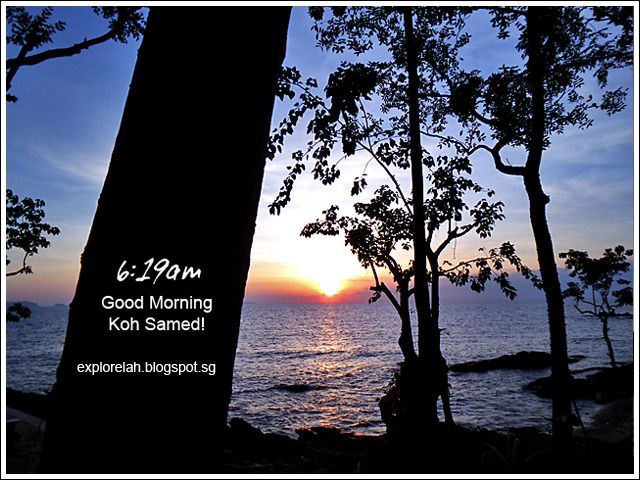
An offshore island in the Gulf of Thailand three hours by car from Bangkok, Koh Samed (also spelt "Ko Samet") offers a front row seat to enjoy an abduction of senses by the theatrics of dawn.

Since a majority of hotel and resort developments are along the east-facing coast of the T-shaped island stretching from Ao Lukyon to the popular Sai Kaew Beach and Ao Vongduen to the more remote Ao Karang ("ao" means "beach" in Thai), catching the sunrise is as simple as heading on to any of the beaches. Some sea facing resorts along this coastal stretch even have the vantage view of the sunrise knocking at their doors.

I had originally planned to catch the sunrise at Ao Lukyon, which is about 20 minutes on foot from Lima Bella Resort located in the Sai Kaew area. But you know how it is with waking up early... it's a tug-of-war between the will to get up and the body's attachment to the bed. By the time my will won the fight, the sky had already taken off its cloak of stars and began putting on the colours for the day.

It was about 6:00am (Thai time) when I left my resort and I knew I wouldn't make it in time to catch the moment when the sun emerges from the horizon if I were to walk to Ao Lukyon. So I decided to go with my instinct and entered the grounds of Baan Supparod Resort, which was opposite the entrance of Lima Bella resort.

I had no idea where I was heading and half expected to be stopped by security holding a super rod (the resort is called "Supparod", get it? Haha. Okay, if you've been reading this blog, you know I'm prone to cheesy jokes with phonetics.). Thankfully, I was allowed in and after a short walk in the direction of the resort's reception, I was by the edge of a rocky coastline in time capture the day's first light!

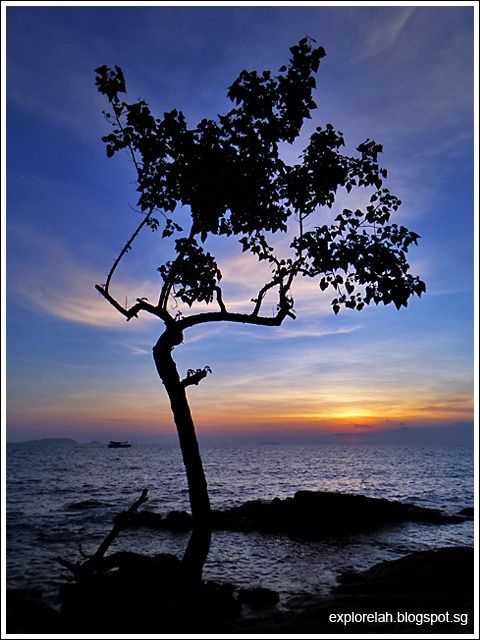
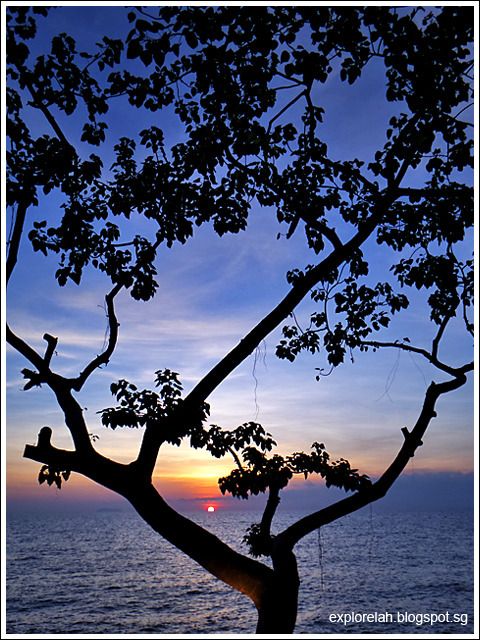
Front row seats at Baan Supparod Resort's viewing deck to watch nature's colour show. I was happy to find some trees around to serve as foreground to shoot the sunrise.

It would've been perfect to have someone special to share the magic of a sunrise with... but I was watching it alone.

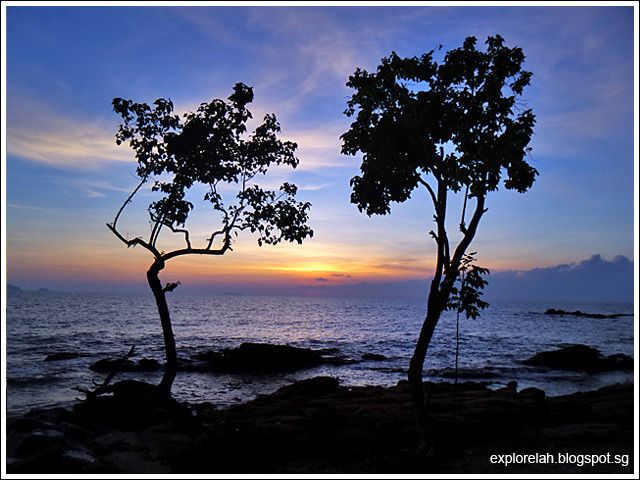
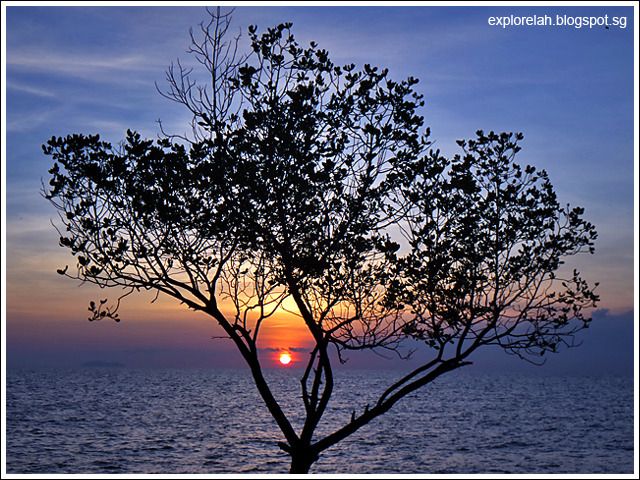
Glad that the tree in the previous photo actually has a companion to watch sunrises and weather storms with.

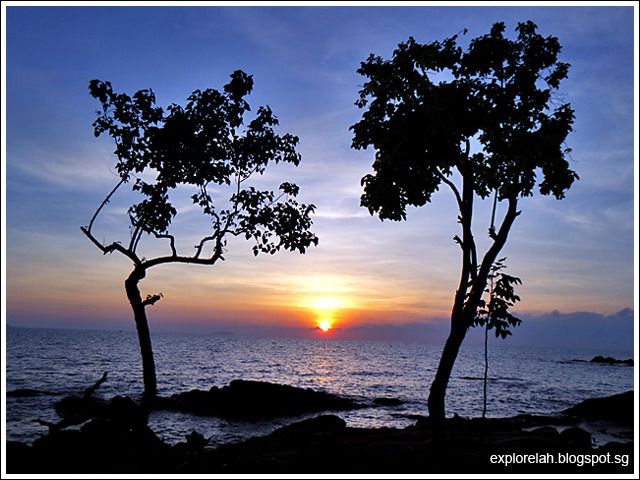
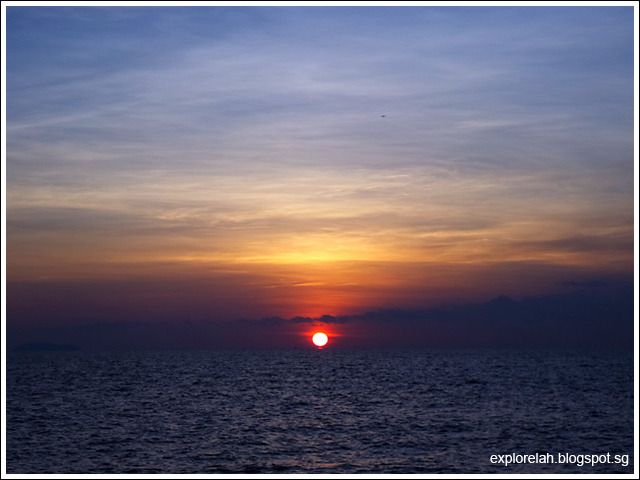
Ta-da... the sun has risen! I shall christen this pair the Lover Trees (情人树) of Koh Samed :o)

Framing nature with nature.

I see a face with a pointed chin, one eye opened and another closed, and a head of wild hair. Do you?

The sunrise was perfect that day without clouds obscuring the luminous yolk.

All in about 20 minutes, the sunrise was over and a new day of making a difference begins...

Related Posts Plugin for WordPress, Blogger...